
Introduction and Objective: There have been growing concerns about GLP-1 RA use and the risk of aspiration pneumonia. Mixed results exist regarding aspiration pneumonia risk with perioperative GLP-1 RA use, with limited focus on elective surgical procedures. Therefore, we assessed the association between preoperative GLP-1 RA use and postoperative respiratory complications in patients undergoing elective […]
Read MoreAuthor: sugaradmin
661-P: Comparative Analysis of Physical Activity and Dietary Behavior between Prediabetes and Normoglycemic Population
Introduction and Objective: Prediabetes (preDM) among adults is on the rise, physical activity (PA) and healthy diet as modifiable lifestyle influencing factors can help prevent or delay progression to type 2 diabetes in adults with preDM, but it is unclear whether these factors vary by prediabetic status.Methods: Cross-sectional study of Chines adults without DM who […]
Read More
Introduction and methodology: Standards of Care in Overweight and Obesity—2025
Collaborators: Collaborator group name: ADA Professional Practice Committee (PPC). Individual names (in order): Nuha A ElSayed, Vanita R Aroda, Louis J Aronne, Kirthikaa Balapattabi, Allison K Bennett, Sathyavathi Challa Siva Kanaka, Kathaleen Briggs Early, Angela Fitch, Stephanie L Fitzpatrick, W Timothy Garvey, Kimberly A Gudzune, Scott Kahan, Kamlesh Khunti, Robert F Kushner, Elizabeth J Pekas, […]
Read More298-OR: Reducing Diabetes Distress Leads to Positive Glycemic Change—Results from the EMBARK Trial
Introduction and Objective: We asked how a diabetes distress (DD) intervention fostered changes in diabetes-related emotion management, diabetes problem solving, and HbA1C; and to test a hypothesized 4-Stage, sequential pathway whereby reductions in DD were linked with improved glycemic outcomes.Methods: PWDs with T1D (n=276) with elevated DD and HbA1cwere assigned to: StreamLine, a diabetes self-management […]
Read More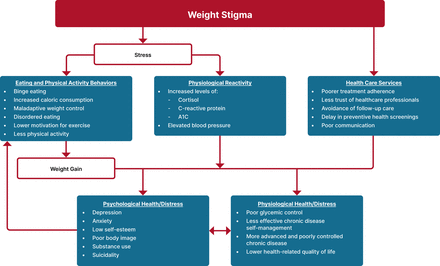
Weight stigma and bias: standards of care in overweight and obesity—2025
Introduction People living with obesity face negative attitudes, stereotypes, and blame from others because of their weight (ie, weight bias).1 Weight bias can be explicit, such that an individual is conscious of negative attitudes (ie, blatant), or it can be implicit, where the person is unwilling or unable to admit these attitudes (ie, unconscious).2 Weight […]
Read More660-P: Understanding the Association between Health-Related Social Needs and Digital Health Use among People with Type 2 Diabetes
Introduction and Objective: Digital health can improve outcomes for people with type 2 diabetes (T2D). Use of digital health tools, however, vary across patient populations. How health related social needs (HRSN) impact digital health use is largely unknown.Methods: Data from the 2022 Health Information National Trends Survey were analyzed to investigate the association between HRSN […]
Read More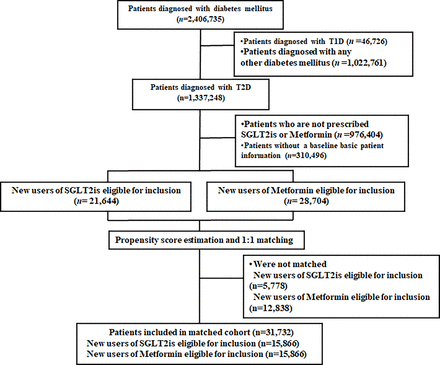
Risk of severe lower extremity arterial disease in elderly Japanese patients with type 2 diabetes: a propensity score-matched model analysis of sodium-glucose cotransporter 2 inhibitors versus metformin
Discussion Our study indicates that compared with metformin, SGLT2is may worsen severe LEAD in elderly patients with T2D, particularly those with low dBP. Revascularization is recommended in patients with LEAD based on their symptoms and Ankle-Brachial Index (ABI).19 A strong correlation between low dBP and abnormal ABI has been noted,20 21 with low dBP exacerbating […]
Read More83-OR: GLP-1RA Efficacy Doubled with Small Molecule Modulators of Pyruvate Kinase for Obesity Treatment
Introduction and Objective: To amplify insulin secretion from beta cells with nutrient-stimulated hormone (NuSH) receptor agonists (e.g., the GLP-1 RA liraglutide (LIRA)), mitochondria must be energized via substrate-driven ADP privation. Since small-molecule modulators of Pyruvate Kinase (mPK) energize mitochondria via the phosphoenolpyruvate cycle and further boost LIRA-amplified insulin secretion, we hypothesized that mPKs could also […]
Read More65-PUB: The Nomogram Development and Validation for Predicting Hypoxemia after Laparoscopic Sleeve Gastrectomy in Patients with Obesity—A Multicenter Retrospective Study
Introduction and Objective: Postoperative hypoxemia (PH) is the most common postoperative pulmonary complication (PPC) of bariatric surgery. However, clinically validated tools and tests are lacking to predict the risk of hypoxemia after bariatric surgery in patients with obesity. Therefore, this study developed and validated a nomogram model for predicting the probability of hypoxemia within 24 […]
Read More890-P: Efficacy of Antiobesity Agents on Fat Distribution—A Systematic Review and Network Meta-analysis of Randomized Controlled Trials
Introduction and Objective: Pharmacotherapy offers a potential solution for individuals with overweight and obesity to decrease their body weight. However, there is limited knowledge of the effects of anti-obesity agents on the distribution of body fat.Methods: The PubMed, Embase, and Cochrane Library databases were reviewed for randomized controlled trials (RCTs) of weight-lowering drugs between inception […]
Read More