
- Up to 1 in 5 lung cancer cases in the United States occur in people who’ve never smoked, but our picture of the disease hasn’t caught up.
- Healthline Editor-in-Chief Robin Hough talks with Gini Harrison, a psychologist and his friend of nearly 30 years, whose only symptom was a sore shoulder blamed on breastfeeding. Her stage 4 EGFR-positive lung cancer diagnosis took nearly nine months.
- They discuss testing, catching lung cancer sooner, and the documentary film, Our Lungs: Time to Breathe, which follows filmmaker Sarah Li and the family of Alex, a 24-year-old who died weeks after diagnosis.
Picture someone with lung cancer. Now picture a 24-year-old soccer player in the prime of his life. A filmmaker in her early 40s with a camera in her hand, doing what she loves best. A busy mom of two, with a shoulder so sore she can’t pick up her newborn, yet struggling to get a diagnosis.
The gap between the picture in our heads and the people actually being diagnosed is costing time. And time is the one thing with lung cancer you cannot get back.
The numbers are stark. Lung cancer can affect anyone. And that includes the young – like Alex, one of the subjects of a powerful new short documentary commissioned by the charity EGFR Positive Lung Cancer UK for their Our Lungs: Time to Breathe campaign.
Alex was a 24-year-old soccer player who died just weeks after receiving a diagnosis of Epidermal growth factor receptor (EGFR) positive lung cancer, following several misdiagnoses born of the fact that no one suspected lung cancer in one so young, fit, and with no smoking history. The film was made by filmmaker Sarah Li, who herself was diagnosed with Stage 4 EGFR+ lung cancer in April 2024, just a month after Alex died from the same mutation of the disease, and charts her journey with survivor’s guilt, what an earlier diagnosis may have meant for Alex, and what that fact means for her own future.
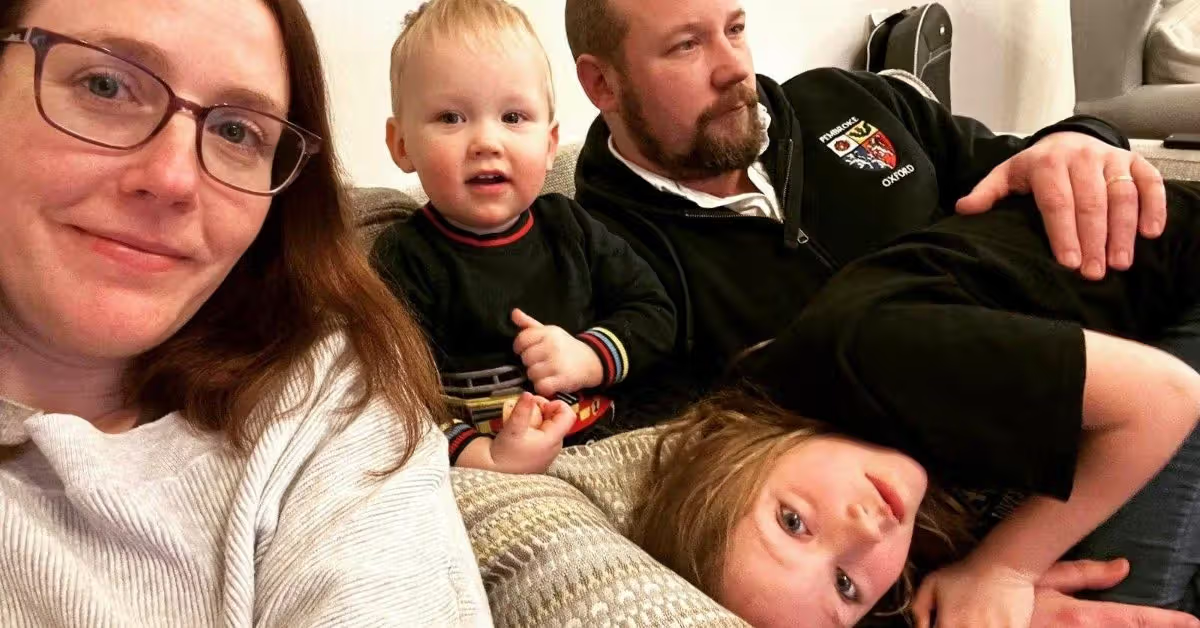
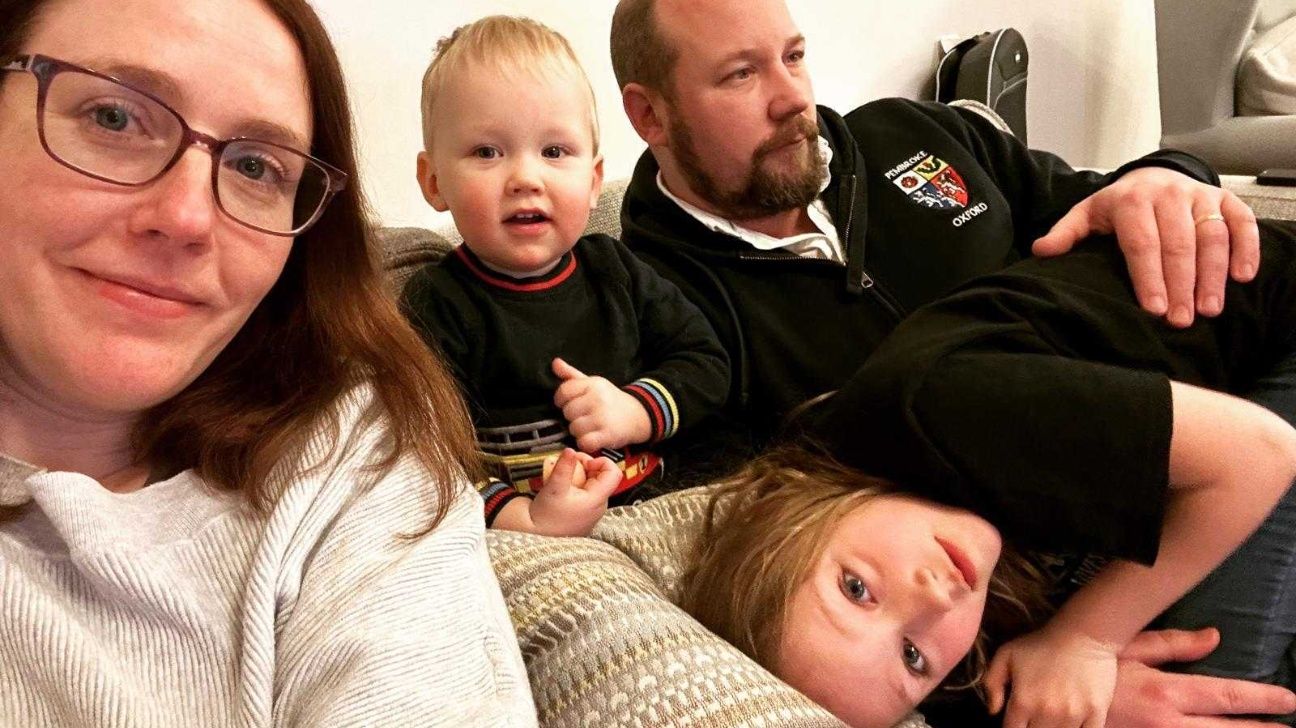
Ahead of Lung Cancer Awareness Month in November, I sat down with my friend, Gini Harrison, to talk about the film, her own journey, and why catching lung cancer sooner matters so much. Gini is a Professor of Psychology at The Open University, a trustee of EGFR Positive Lung Cancer UK, and is living with stage 4 EGFR-positive lung cancer. She’s also the mom at the top of this piece, whose sore shoulder was initially attributed to breastfeeding posture.
This interview has been lightly edited for clarity and length.
Take me back to the beginning. What were your initial symptoms, and what were you told?
Gini Harrison: I’d had my son, Michael, in February 2021 and was on maternity leave. My daughter, Emily, was five. I think the shoulder pain started around March, but that was it. No cough, no breathlessness… nothing that made me think about my lungs.
Initially, they gave me painkillers, which helped a bit. But the pain kept getting worse. Eventually, I started losing movement and strength in my arm, and it got to the point where I couldn’t pick up my son anymore.
This was all happening during COVID, so my appointments were over the telephone. Eventually, after months without being examined face-to-face, I paid to see a shoulder specialist. As soon as he touched my shoulder blade and I practically leaped out of the chair, he knew something wasn’t right. He ordered an MRI, which showed a tumor in my shoulder blade and another in my upper right lung. In December 2021, I was diagnosed with stage IV lung cancer.
What do you remember about that period, and how did it feel to be reassured when your instinct said otherwise?
Gini Harrison: I wasn’t thinking, “This must be cancer.” I was just thinking, “Why isn’t this getting better?”
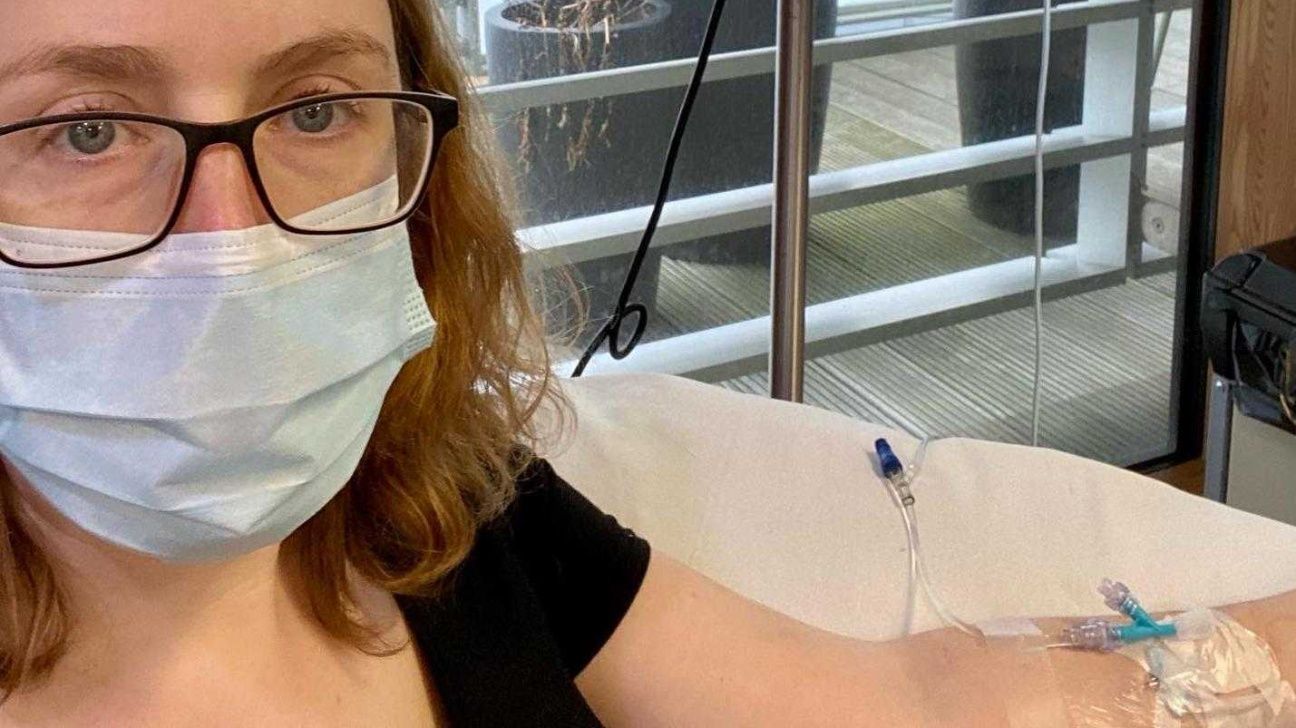
I felt like no one was really listening to me. Initially, the breastfeeding explanation made sense, and I was massively reassured by it. But as time went on, the reassurance just didn’t match what I was experiencing.Gini Harrison
And I think that distinction matters. Patients shouldn’t have to identify their own disease before they can get help. You should be able to say that something is wrong and be listened to.
What went through your head when you heard “lung cancer”? Did you have any of the assumptions you now push back against?
Gini Harrison: It was devastating. So many of my first questions were about the children: “How are we going to tell them?” “Am I going to be here to see them grow up?” “Will they remember me?” Suddenly, there was a question mark over a future I’d taken for granted.
I was also completely shocked by the type of cancer. If someone had said breast cancer, I don’t think I would have been anywhere near as surprised. But lung cancer?! I’d always associated it with smoking, and I’d never smoked.
I hadn’t imagined that this particular cancer could ever happen to me. So yes, I had some assumptions that I now challenge. I understand how deeply rooted they are because I had them too.
When people learn you have lung cancer, what do they say? What’s the first question you get asked?
Gini Harrison: People are often shocked, and one of the first questions is whether I smoked.
What should someone with lung cancer look like? A mother holding her baby? A young soccer player? Someone you work with? They can look like any of those people.Gini Harrison
And they often look healthy. That doesn’t mean everything is easy, or that there aren’t side effects. It just means you can’t tell what someone is dealing with by looking at them.
I think we’ve given lung cancer such a narrow public image that people outside it can become almost invisible.
Has anyone ever asked if you smoked? How do you answer, and how should it land?
Gini Harrison: Oh, yes! Once, I spoke to a doctor about a breathing problem after radiotherapy. He asked, “How much did you smoke?” When I said I’d never smoked, he replied, “Well, how did you get lung cancer then?”
On another occasion, I went to a hospice for help managing side effects, and someone there asked, “How are you still alive?” That’s quite a thing to hear when you’ve come looking for support!
It can be really stigmatizing. You end up feeling that you have to explain your diagnosis, or even justify the fact that you’re still here.Gini Harrison
When people ask about smoking, I try to explain that I’ve never smoked and I’m certainly not alone. Never smoking doesn’t make you immune. But I’m also very clear that nobody deserves lung cancer, whether they’ve smoked or not. We shouldn’t be creating a hierarchy of who deserves compassion.
Smoking history matters medically. But in a personal conversation, “How are you doing?” is a much kinder place to start.
Explain biomarker or genetic testing as if I’m a friend (which I am!) who’s never heard of it. Why does it matter?
Gini Harrison: Lung cancer isn’t one single disease. Two people can both have lung cancer, but different changes in their cells may be driving it.
Genes contain the instructions that tell our cells how to work, including when to grow and divide. Changes in those genes (called mutations) can cause cells to keep dividing when they shouldn’t, forming a tumor. In my case, there’s a mutation in a gene called EGFR.
Biomarker testing looks for these changes, as well as other features of the cancer that can guide treatment. If we know what’s helping the cancer grow, there may be a medication that specifically targets it.
The word “genetic” can sound scary, particularly when you have children. But these changes usually develop in cancer cells over a person’s lifetime. They aren’t necessarily inherited.
What would you say to someone reading this who has a symptom that won’t go away?
Gini Harrison: Please get it checked. And if it persists, worsens or doesn’t improve with treatment, go back. Explain what’s changed and how it’s affecting your life. Ask, “What happens next if this doesn’t get better?”
The symptoms don’t always look like lung symptoms. Mine was shoulder pain.
Lung cancer can look like anyone: investigate persistent, unexplained symptoms, whatever the person’s age or smoking history.Gini Harrison
Most symptoms will turn out to be something other than cancer. But when a symptom continues to worsen, the original explanation needs to be reconsidered. Lower risk doesn’t mean no risk.
And I don’t want all the responsibility to fall on patients to keep pushing. Reassurance should come with a next step.
How did you get involved in advocacy, and what was the hardest thing about being part of it?
Gini Harrison: Once I had recovered from my initial treatment, I realized that I wanted to help others in my situation, so I became a trustee of the charity EGFR Positive Lung Cancer UK. Through this work, we produced a film, Our Lungs: Time to Breathe. At the heart of it, it challenges the perception of what someone with lung cancer looks like.
The hardest part is how close to home it feels. Alex was so young, and that worked against him. Watching his family talk about what happened is heartbreaking. It’s just so unfair.
What did you hope people would see in Sarah’s and Alex’s stories?
Gini Harrison: Sarah’s story shows life continuing alongside lung cancer. She’s a filmmaker with ambitions, people she loves, and things she wants to do.
Through Alex’s family, you see the enormity of the loss. I hope people feel that, rather than simply hearing another statistic.
Together, Alex and Sarah’s stories make the need for earlier diagnosis feel personal. More time means more chances to make memories with the people you love. That’s what’s at stake.Gini Harrison
What’s changed since you were diagnosed, and what hasn’t?
Gini Harrison: For me, the biggest thing is that my children are growing up and I’m here to see it. Michael is now five (the age Emily was when I was diagnosed), and Emily is about to turn ten. I can’t tell you how grateful I am to be here with them.
It wasn’t about big bucket-list things. It was about being here every day. Seeing Michael start school. Seeing Emily reach double figures. Those milestones are enormous when you’ve wondered whether you’d get to see them.
After chemotherapy and radiotherapy, I’ve had no evidence of disease since May 2022, and my scans remain stable. But a big change has been seeing the progress in available treatment. It gives me more hope about what might be available if I need treatment again.
The public image of lung cancer still needs to catch up. We need better recognition of symptoms, access to appropriate testing and treatment, and support for the whole person. As a psychologist as well as a patient, I’m particularly aware that psychological well-being and family life need attention alongside the cancer itself.
What do you want people to do after reading this?
Gini Harrison: I’d love for people to share the film and help get it in front of those who wouldn’t normally think lung cancer has anything to do with them. And take something from it into everyday life: book the appointment you’ve been putting off, ask your doctor about testing, or respond with kindness when someone tells you about their diagnosis.
Just being willing to rethink your assumptions could make a difference.
What do you wish more people would say to someone in your position?
Gini Harrison: “You don’t have to put a brave face on with me. How are you really doing?”
When you look well, or your scans are good, people can assume you’re “fine now”. But I’m not sure the fear ever completely goes away. Every scan is terrifying. It feels like there’s a sword of Damocles hanging over my head, and part of me is waiting for the bad scan. I also still have lasting side effects from treatment, and probably always will.
My life has fundamentally changed. Some of that has brought good things, but it doesn’t make the difficult parts disappear. It helps when someone gives you room to be honest about both, without expecting you to reassure them or turn everything into a positive story.
Robin Hough is the Editor-in-Chief of Healthline, and in addition to this regular Letter from the Editor column, he can be found every other Saturday in our Healthline Daily newsletter. He’ll soon be launching a dedicated Letter from the Editor newsletter coming to an inbox near you later in the fall.
Leave a Reply