
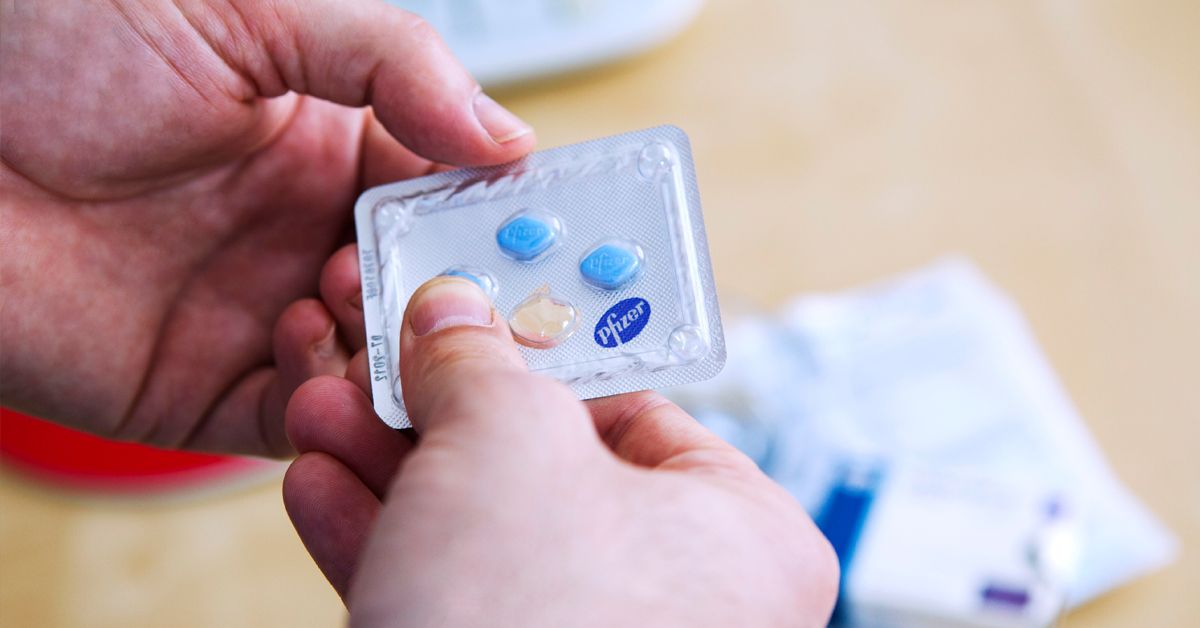

- Researchers report that the erectile dysfunction drug Viagra may help slow the spread of cancer.
- Sildenafil, the active ingredient in Viagra, appears to interfere with cancer cells’ ability to metastasize and travel to other parts of the body.
- More research is needed to determine if Viagra would be more effective against certain types of cancer and whether the drug can benefit both males and females.
The erectile dysfunction drug Viagra may be effective in slowing the spread of cancer, according to a new study.
Researchers said Viagra’s active ingredient, sildenafil, shows the potential to interfere with cancer cells’ ability to metastasize and travel around the body.
They said sildenafil accomplishes this feat by blocking cancer cells’ access to cholesterol, a building block that allows tumors to metastasize.
The researchers said male participants who’d used Viagra before being diagnosed with cancer had better overall survival rates than those who hadn’t taken the drug. They added that the survival rate was even higher for males who took both Viagra and statins.
Researchers said their study did not specify if Viagra would be more effective against certain types of cancers.
“We evaluated the association between pre-cancer diagnosis use and overall survival across a large cohort of cancer patients rather within specific cancer types,” Samah Hayek, MD, senior epidemiologist at the Clalit Research Institute in Israel and a co-author of the study, told Healthline. “Therefore, we cannot conclude whether the association is stronger for one cancer than another.”
The researchers also did not evaluate whether Viagra could help prevent the spread of cancer in women.
“Our retrospective analysis included mainly men because sildenafil is predominantly prescribed to men,” said Hayek. “As a result, we cannot determine from our clinical data whether a similar association would be observed in women.”
Hayek said that more research, including clinical trials, is needed to determine if Viagra can one day become part of regular cancer treatment.
The researchers recently published their findings in the journal Cancer Research.
“This is an interesting study, and it was well-designed,” said S. Adam Ramin, MD, a urologist, urologic oncologist, and medical director of Urology Cancer Specialists in Los Angeles. Ramin wasn’t involved in the study.
“It appears to have real applications in real-world situations, so it shows promise,” he told Healthline.
The new study was led by researchers from the Weizmann Institute of Science in Israel in collaboration with scientists from Israel’s largest health organization, Clalit Health Services.
The U.S. National Cancer Institute, as well as physicians and researchers from Clalit’s Beilinson and Hasharon Hospitals, also participated.
Researchers examined laboratory mouse models of cancer and cultures of cancer cells from human subjects.
The work was done in coordination with scientists from Clalit, who analyzed more than 20 years of anonymized medical records from about 5 million participants, including an observational study of 40,000 males diagnosed with cancer.
“This study bridges two worlds,” said Hayek. “The laboratory identified a promising biological mechanism while Clalit’s real-world data showed that the same signal may also be reflected in patient outcomes.”
The researchers reported that they uncovered a previously unknown pathway showing how Viagra’s active ingredient, sildenafil, affects cholesterol regulation inside cells.
They explained that cancer cells depend on cholesterol to detach from primary tumors and invade other organs. By limiting cholesterol access, the researchers said, sildenafil may make it more difficult for tumors to spread.
The researchers added that their findings also suggest that combining sildenafil with statins may further reduce cancer cells’ ability to obtain or produce cholesterol, potentially strengthening the anti-metastatic effect.
The researchers emphasized that the better survival rates were limited to males who had taken Viagra before their cancer diagnosis.
“Our study did not examine whether giving Viagra to patients after they are diagnosed with cancer improves outcomes,” Hayek said. “It looked only at medication use before diagnosis and its association with survival. These findings are encouraging, but they do not mean cancer patients should start taking Viagra.”
Ramin noted that cancer cells can develop “escape mechanisms” to elude certain therapies, so more research is needed to determine how viable a Viagra treatment regimen would be.
Other experts not involved in the study agreed. “These results are preclinical — meaning the data were derived from cell lines or mice,” said Mike Lattanzi, MD, a medical oncologist and the director of the Genitourinary Cancer Research Program at Texas Oncology.
“They are intriguing and thought-provoking, but they would need to be validated in human studies in order to inform the management of cancer patients,” Lattanzi told Healthline.
While Lattanzi emphasized caution, he also expressed some hope.
“One of the reasons this is such an interesting study is that the molecules that they used to treat the cancer cells are medications many people already take on a daily basis,” he said. “I think it’s certainly plausible that there is a synergistic anticancer effect from the combination of [Viagra and statins].”
“[However], I think we’re a long way off from developing any kind of cancer prevention, or so-called chemoprevention strategy, utilizing drugs like these to prevent cancer,” Lattanzi added.
Ramkishen Narayanan, MD, a urologist, urologic oncologist, and the director of the Center for Urologic Health at The Roy and Patricia Disney Family Cancer Center at Providence Saint Joseph Medical Center in California, shared a similar sentiment.
“The basic science mechanism of potential anti-tumorigenic activity using the cholesterol biosynthesis pathway is exciting, especially when currently widely available medications may have a serendipitous role in cancer treatment,” he told Healthline.
“The ability to reliably translate the findings to real-world clinical scenarios is still very limited from the specifics of the study, as the authors acknowledge. Regardless of the study limitations, utilizing PDE5 inhibitors and statins as consistent adjunctive therapies to standard of care cancer therapeutics appears to have strong merit,” Narayanan said.
Scientists at Pfizer Pharmaceuticals originally tested sildenafil as a potential treatment for high blood pressure.
However, they discovered the artificial compound could induce penile erections, usually within 30 to 60 minutes after taking the drug.
Pfizer patented sildenafil in 1996, and Viagra, the company’s medication using that active ingredient, was approved by the Food and Drug Administration (FDA) in 1998 as a treatment for the newly named condition of erectile dysfunction.
Viagra works by increasing levels of a signaling molecule known as cGMP. Elevated cGMP levels dilate blood vessels, increasing blood flow to the penis.
It’s estimated that more than 1 million men in the United States currently have prescriptions for Viagra.
Viagra is a prescription tablet that comes in three different doses of 25 mg, 50 mg, and 100 mg. It can be taken up to 4 hours before sexual activity. It’s recommended that Viagra be taken no more than once a day.
There are side effects for some people who take Viagra. Some of the common ones are:
- headache
- flushed skin
- muscle pain
- vision change
- dizziness
Some of the more serious and less common side effects include vision loss in one or both eyes, hearing loss, heart issues, and low blood pressure.
Viagra can also sometimes cause priapism, a long and painful erection that lasts more than 4 hours.
It’s
In addition, more than 600,000 people in the United States die from cancer annually.
The cancer mortality rate is higher in men than women. Among ethnic groups, the cancer mortality rate is highest in non-Hispanic Black men and lowest in non-Hispanic Asian/Pacific Islander women.
It’s estimated that there are more than 18 million cancer survivors in the United States. That number is expected to rise to 26 million by 2040.
Cancer occurs when genetic mutations in abnormal cells cause them to divide rapidly and spread to other tissue and organs. These mutations can be inherited or they can develop due to environmental factors.
These rapidly growing cells can cause tumors to develop and can also disrupt the body’s regular functions.
There are a number of factors that can raise a person’s risk of cancer. They include:
- tobacco use
- high alcohol consumption
- unhealthy diet
- lack of physical activity
- air pollution
- radiation exposure
Early detection and treatment of cancer can improve a person’s chances of surviving the disease.
- avoiding tobacco
- limiting alcohol consumption
- eating a diet with plant-based foods, lean proteins, and healthy fats
- having a consistent exercise routine
- maintaining a healthy weight
Ramin said that inflammation inside the body is a chief contributing factor to cancer development.
Ramin recommended a diet low in refined carbohydrates, found in foods such as bread, pasta, and rice, and avoiding processed foods.
He said anti-inflammatory foods, such as berries, as well as supplements such as vitamin D and magnesium, can also be helpful.
Lattanzi and Narayanan shared a similar philosophy.
“I always advocate for regular physical exercise, eating as healthy a diet as possible — rich in fresh foods and vegetables — and trying to maintain a normal body mass index and muscle mass,” said Lattanzi.
“Lifestyle modifications geared toward cancer prevention are always multifactorial and typically involve a multi-pronged effort to maintain good cardiovascular health, reduce inflammation, strengthen the immune system, and avoid metabolic syndrome,” said Narayanan.
Leave a Reply