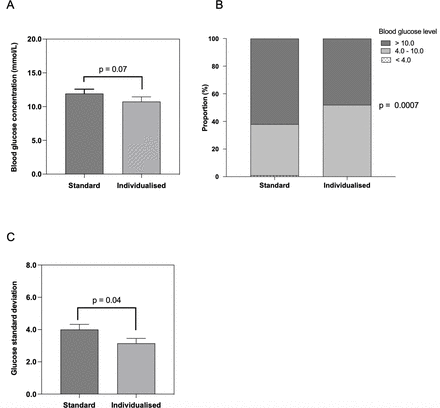
Discussion This analysis evaluated the performance of an individualized BBI regimen for the treatment of prednisolone-associated hyperglycemia in hospitalized patients. Compared with patients treated with a standard weight-based BBI regimen, use of an individualized insulin regimen was associated with a mean 24-hour POC glucose on day 1 that was 1.2 mmol/L, but this difference did not […]
Read MoreMonth: November 2025
Emergency Contraceptive May Also Lower Breast Cancer Risk, Study Finds
Share on PinterestA common drug used as an emergency contraceptive may also help lower breast cancer risk. Tom Werner/Getty Images Researchers say that a drug used as an emergency contraceptive or to treat fibroids may help lower breast cancer risk. Ulipristal acetate, the “morning after pill,” was found to reduce the activity of breast cells […]
Read MoreWaist-to-Height Ratio More Accurate for Predicting Risk
Share on PinterestA new study found that waist-to-height ratio was closely linked to heart disease risk than BMI or waist circumference. Ableimages/Getty Images A new study suggests your body shape may reveal heart disease risk more accurately than BMI. Researchers found people with larger waists relative to their height were more likely to develop calcium […]
Read MoreIntermittent Fasting Does Not Impair Thinking, Cognitive Function
Share on PinterestShort-term fasting is unlikely to have a significant impact on mental sharpness, according to new research. Johner Images/Getty Images Researchers report that intermittent fasting of less than 24 hours does not appear to diminish a person’s mental performance during the periods where they are not eating. They say the human body has adapted […]
Read MoreDisparities in diabetes technology utilization in youth with diabetes
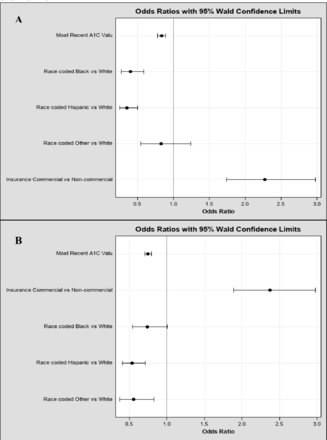
Abstract Background Diabetes technology can improve glycemic variability and diabetes outcomes, but there are disparities in patient use. Aims Identify racial, ethnic, and socioeconomic disparities in technology utilization and determine provider-, patient-, and parent-identified barriers. Methods Technology (continuous glucose monitors (CGM) and pump) usage and demographic data on patients at a large urban pediatric hospital […]
Read MoreMetabolic factors moderate the association between hepatic fibrosis and atherosclerotic cardiovascular risk in type 2 diabetes
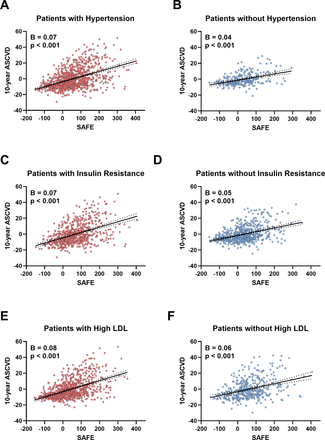
Discussion This multisite cross-sectional study provides novel insights into the complex interplay between hepatic fibrosis, metabolic parameters and ASCVD risk in hospitalized patients with T2DM and MASLD, who had no pre-existing CVD. Our findings suggest that higher SAFE score independently predicted an elevated 10-year ASCVD risk in this high-risk population. Furthermore, we identified hypertension, insulin […]
Read MoreHemoglobin A1c time-in-range, mortality, and diabetes complications in older adults with diabetes
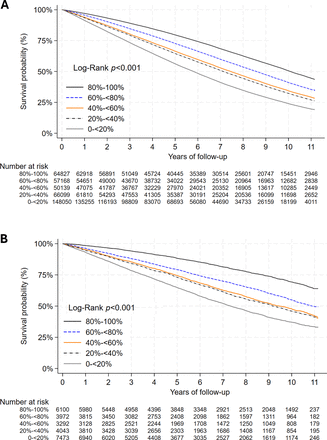
Study population This was a retrospective cohort study with patients followed longitudinally. We used electronic health record and associated administrative data from January 1, 2004, through December 31, 2018. The two study cohorts were comprised of patients 65 years or older at the start of enrollment, including VA patients who were dually enrolled in Medicare […]
Read MoreDisconnect between advanced diabetes technology and psychological well-being among young people: a cross-sectional analysis
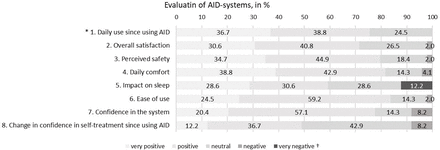
Discussion The aim of this survey was to examine how AYA experience the use of diabetes technologies in real-life settings. The focus was on PROs, as these are particularly important to the everyday life and well-being of this age group. As in other studies,11 the use of AID systems was associated with improved glycemic control […]
Read MoreCombination therapy with sodium-glucose cotransporter 2 inhibitors and glucagon-like peptide-1 receptor agonists in heart failure patients with type 2 diabetes
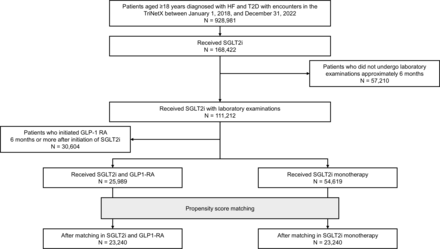
Methods Study population We conducted a multicenter, retrospective observational study using TriNetX (TriNetX, Cambridge, Massachusetts, USA), a global healthcare data and analytics platform. The TriNetX platform provides real-world data analysis using electronic health records (EHR) for more than 250 million patients from 130 healthcare organizations across North America, South America, Europe, the Middle East, Africa, and […]
Read MoreSex-specific protective role of lower-body fat in type 2 diabetes: mediation through insulin resistance in a BMI-matched population
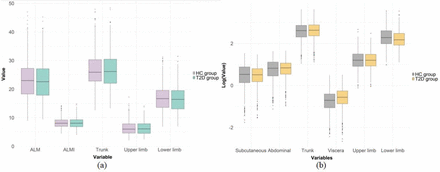
Discussion By meticulously matching participants for age, sex, and BMI, we minimized the confounding effects of these variables, thereby isolating the unique contribution of regional fat and muscle to diabetes pathogenesis. Our study provides novel insights into the sex-specific associations between body composition and diabetes risk. The negative association between lower limb fat mass and […]
Read More