
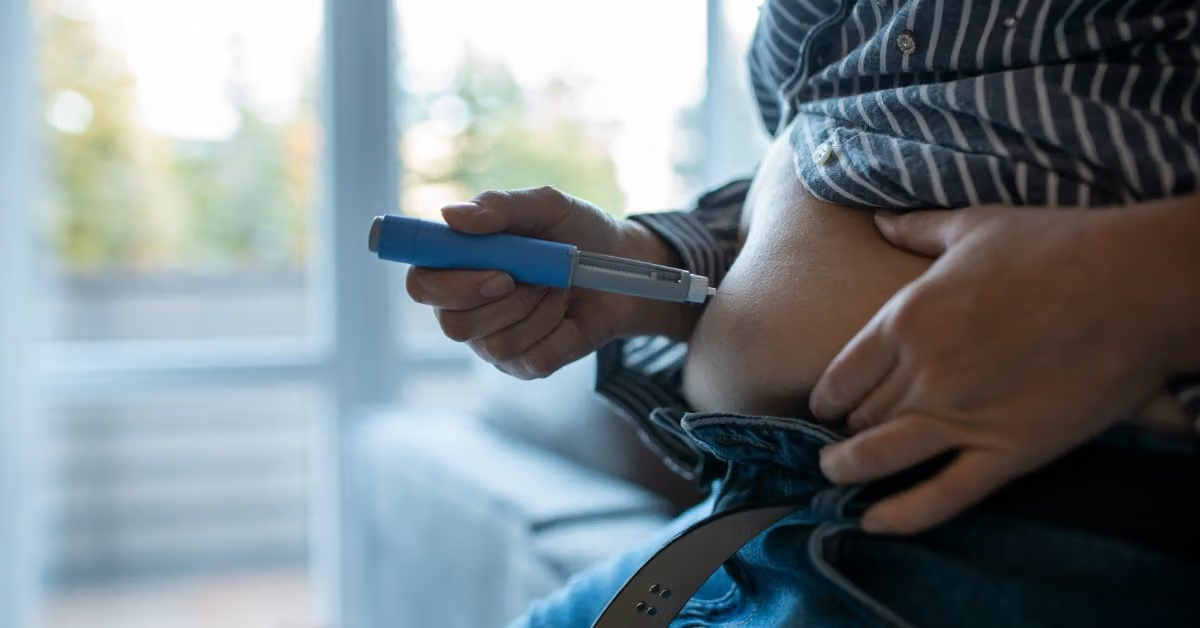
- A study presented at the 2026 Annual Meeting of The Menopause Society found that women using menopause hormone therapy (MHT) alongside semaglutide (Ozempic, Wegovy) experienced greater weight loss than those taking semaglutide alone.
- Tirzepatide (Mounjaro, Zepbound) combined with MHT showed only modest early differences in weight loss, with no statistically significant difference at later time points.
- Certain hormone therapy medications are FDA-approved to treat menopause symptoms such as hot flashes and vaginal dryness, but not for weight loss.
- Experts recommend individualizing treatment decisions based on symptoms, medical history, and health goals rather than adding MHT solely to enhance weight loss with GLP-1 medications.
Weight gain is a common concern among middle-aged women. While much of this is associated with aging, hormonal changes during menopause can also contribute to changes in body fat and its distribution.
GLP-1 medications have been shown to be effective for weight loss. However, the results may vary by sex and reproductive stage.
For example, studies have found that women and
A previous small observational study in postmenopausal women found that using MHT alongside semaglutide, the active ingredient in Ozempic and Wegovy, was associated with greater weight loss.
However, whether hormone therapy influences weight loss outcomes with different GLP-1 medications remains unclear.
To investigate this question, researchers compared weight loss in middle-aged women receiving either semaglutide or tirzepatide, with or without MHT. The findings have not yet been published in a peer-reviewed journal.
The study included 3,855 women with an average age of 57 and an average body mass index (BMI) of 36 kg/m2.
The semaglutide cohort included 2,379 individuals, while the tirzepatide cohort included 1,476 individuals.
The average follow-up in the semaglutide cohort, both with and without MHT, was 26 months. The average follow-up in the tirzepatide group was 17 months for those using MHT and 16 months for those not using it.
The researchers found that in the semaglutide cohort, those using MHT alongside the GLP-1 medication had significantly greater weight loss at 9 months than those not using MHT.
These differences were sustained at 12 and 15 months and at the final follow-up. Those using MHT were also more likely to reach up to a 30% total body weight loss than those not using it.
In the tirzepatide cohort, those using MHT had a modestly greater weight loss at 3 months and were more likely to achieve more than 5% total body weight loss by the final follow-up. However, no significant difference in weight loss was observed at later time points.
These findings suggest that MHT use may be associated with greater weight loss among middle-aged women taking semaglutide. However, the researchers did not observe a sustained, statistically significant difference in weight loss among those taking tirzepatide.
Betul Hatipoglu, MD, Director of the Diabetes and Obesity Center at the University Hospitals Cleveland Medical Center, who was not involved in the study, told Healthline that the findings are encouraging.
However, she also cautioned that people should be careful not to interpret them as evidence that hormone therapy should be added to GLP-1 treatment specifically to enhance weight loss.
“This is an association, and the study provides an opportunity to discuss how menopause, aging, changes in body composition, and metabolic health can be present,” she said.
It is important to keep in mind that the
The study authors noted that larger studies are needed to confirm their observations and to inform individualized strategies for middle-aged females.
Sherry Ross, MD, board certified OB-GYN and Women’s Health Expert at Providence Saint John’s Health Center in Santa Monica, CA, who was not involved in the study, noted that weight gain is one of the most common concerns she hears from women during menopause. Beyond affecting self-esteem and quality of life, excess abdominal fat can increase the risk of type 2 diabetes and heart disease.
“Finding effective, sustainable ways to manage weight is important for women’s long-term health and healthy aging,” she said.
“I would like to see prospective, randomized studies examining GLP-1 medications with and without hormone therapy to determine whether hormone therapy directly improves weight loss and helps women maintain it over time. In the meantime, treatment decisions should be individualized and guided by a healthcare professional.”
Ross advised that the decision should be based on your individual symptoms, health history, and treatment goals.
“Hormone therapy can significantly improve disruptive menopausal symptoms, including hot flashes, sleep disturbances, and mood changes. By helping women feel better and more energetic, it may also make it easier to exercise and manage their weight,” she said.
Hatipoglu noted that GLP-1-based medications, on the other hand, are effective treatments for obesity and can improve important aspects of metabolic health. Their use should be based on an individual’s weight-related health risks, medical history, and treatment goals.
“For a woman who has both bothersome menopausal symptoms and obesity, it may be entirely appropriate to consider both treatments. But I would not recommend starting hormone therapy solely to improve the weight-loss response to a GLP-1 medication based on the evidence currently available,” she said.
“It is also important to remember that successful weight management during and after menopause is about more than the number on the scale. Preserving muscle mass, maintaining bone health, improving metabolic health, and supporting long-term physical function are equally important.”
You should speak with your healthcare professional about the risks and benefits of all treatment options.
Leave a Reply