
- A new analysis of previous studies found that orforglipron promoted weight loss in women regardless of their menopausal status.
- This is important since the decline in estrogen after menopause can make weight loss more difficult.
- Menopausal women also tend to gain weight around their midsection, which is associated with health risks.
- The fact that the new GLP-1 comes in a pill form offers a convenient option for many women.
- However, doctors stress that it is also important to select the treatment that is the most effective for you.
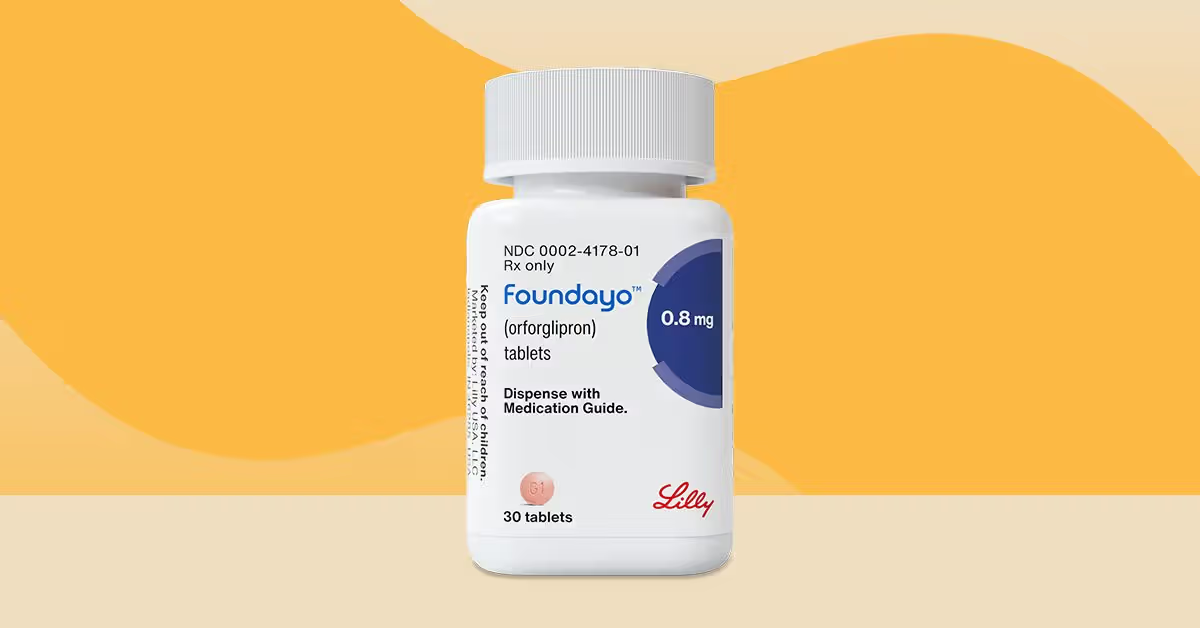
A new GLP-1 pill called orforglipron (Foundayo) has been shown to help women lose weight, regardless of menopausal status, according to new research.
A group of researchers, including senior author Hunter Thomas Hoffman, PharmD, a clinical research scientist affiliated with the drug’s manufacturer, Eli Lilly, analyzed data from two prior trials, ATTAIN-1 and
These studies reveal that this medication works equally well for women who have not yet gone through menopause, those who are currently experiencing it, and those who are postmenopausal.
Orforglipron offers a promising new option for managing weight in women with obesity or overweight, especially those with type 2 diabetes.
The ATTAIN-1 and ATTAIN-2 studies involved women who were either obese or overweight and who had at least one medical condition related to their weight.
Obesity was defined as a body mass index (BMI) of 30 or higher, and overweight as a BMI of 27 or higher.
The participants were divided into groups based on their menopausal status: premenopausal (before menopause), perimenopausal (during the menopause transition), and postmenopausal (after menopause).
Each group included between 142 and 225 females who either received orforglipron or placebo, an inactive pill with none of the drug in it.
The ATTAIN-1 study focused on people who were overweight or obese but did not have diabetes. ATTAIN-2 included participants who had both overweight or obesity and type 2 diabetes.
The purpose of analyzing these two groups separately was to understand how orforglipron works in people with different health conditions.
The researchers measured several outcomes over a period of 72 weeks. They examined changes in body weight, waist circumference (the distance around the waist), and the waist-to-height ratio, a measure used to assess body fat distribution.
They also tracked how many women reached specific weight loss goals, such as losing at least 5%, 10%, 15%, or 20% of their body weight, compared to those who took the inactive pill.
By studying these factors, the researchers were able to determine not only whether orforglipron helped women lose weight but also how much weight loss was achieved and how it affected their body shape.
The results showed that women who took orforglipron experienced significant weight loss regardless of their menopausal status.
In the ATTAIN-1 and ATTAIN-2 studies, premenopausal, perimenopausal, and postmenopausal women all lost an average of up to 14% of their body weight.
This means that the medication was effective for women at different life stages, including those experiencing menopause, when weight gain is often a challenge.
In addition to losing body weight, women in the orforglipron groups also saw meaningful reductions in waist circumference. According to a news release, waist measurements decreased by up to 12.5 centimeters (about 5 inches) across all menopausal groups in both studies.
The waist-to-height ratio also improved for many women taking orforglipron. More participants treated with the medication moved into lower waist-to-height ratio categories than those who took the placebo.
This indicates a healthier distribution of body fat and suggests a lower risk of heart disease.
When looking at the number of women who reached specific weight loss milestones, orforglipron performed much better than the placebo. Up to 83% of women on orforglipron lost at least 5% of their body weight, while 30% of women on placebo reached that same level of weight loss.
Losing 5% or more of body weight is often considered clinically meaningful, as it can lead to improvements in blood pressure, blood sugar, and cholesterol levels.
Overall, these findings suggest that orforglipron is a promising new medication for weight management in women with obesity or overweight, including those who also have type 2 diabetes.
This can be especially helpful for those navigating the challenges of menopause while trying to manage their weight.
James J. Chao, MD, FACS, Chief Medical Officer and co-founder of VedaNu Wellness, wasn’t involved in the research, but said the significance of these findings for postmenopausal women.
“The 14% is what’s grabbing headlines,” he told Healthline, “but up to 12.5 cm from the waistline is what I’m interested in.”
According to Chao, as females enter postmenopause, they tend to store more fat around their midsection.
“This is the type of fat that can cause heart disease,” he said. “So a pill that can help a 38-year-old woman lose the same amount as a 62-year-old breaks that myth.”
Additionally, in contrast to most GLP-1 drugs, which are injectable, it’s a once-a-day pill. You can also take it any time, Chao explained, making it more convenient.
“No needle, no refrigerator, and up to 83% of participants lost at least 5%,” he said. “Sometimes it’s the simple things that make a difference.”
Luca Moretti, MD, a medical doctor at Sapienza University of Rome, who wasn’t involved in the studies, added that convenience isn’t the only thing to consider when deciding whether to use orforglipron.
Obesity management should begin with an individualized plan that includes nutrition, physical activity, and the management of other risk factors.
“When these measures are not sufficient, adding pharmacological treatment can be considered together with a physician,” he told Healthline.
Moretti further advised speaking with your physician about any potential side effects, your existing medical conditions, other medications you are taking, and your treatment preferences.
“So the most useful question to ask a doctor is not simply, ‘Is Foundayo more convenient?’ but rather: ‘Among the available treatments, which one offers the best balance of effectiveness, tolerability, and practicality for me?’” he said.
Leave a Reply