
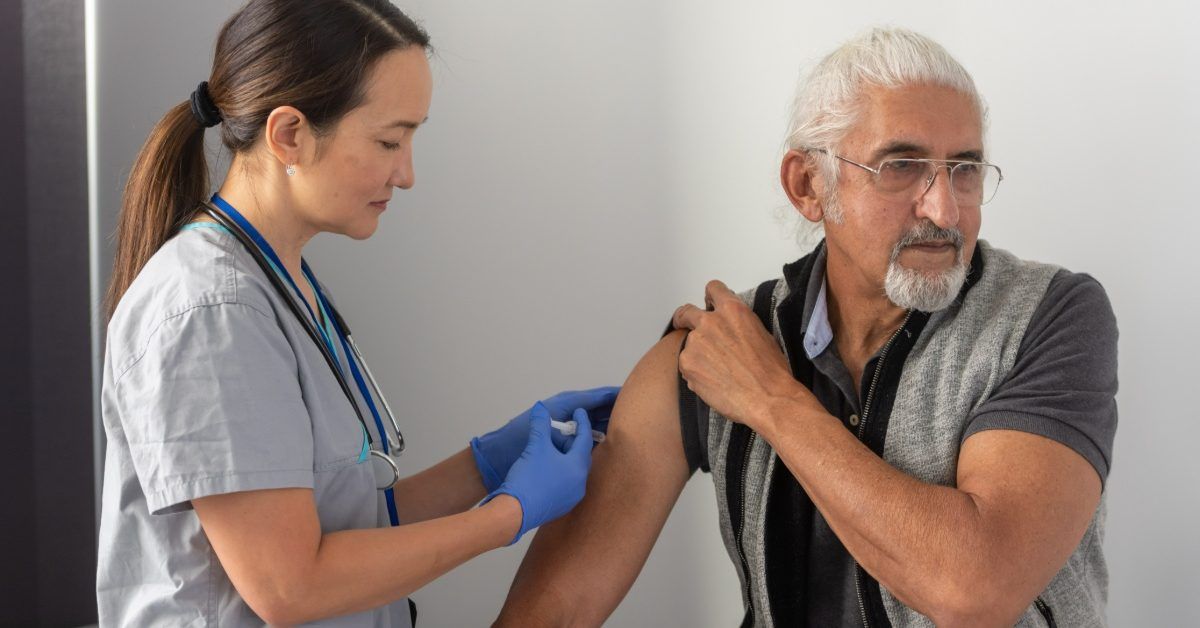

- A recent study found that the recombinant shingles vaccine (Shingrix) was associated with a 9% lower cardiovascular disease burden compared with the older live vaccine.
- Researchers observed lower burdens of coronary heart disease, heart failure, ischemic stroke in men, and atrial fibrillation (AFib) among those who received Shingrix.
- The CDC recommends the shingles vaccine for all adults ages 50 and older, as well as adults ages 19 and older who are or will be immunocompromised.
The recombinant shingles vaccine (Shingrix) may reduce the burden of cardiovascular disease compared with the older live vaccine (Zostavax), according to a study published in
The United States began transitioning from Zostavax to Shingrix in 2017, and Zostavax was discontinued in the United States in 2020.
The researchers noted that previous studies compared people who had the Shingrix vaccine to those who were unvaccinated. This study compared individuals who had received the Shingrix vaccine with those who had received Zostavax before its discontinuation.
They also noted that this is an observational study, which means they can’t prove cause and effect. More research is needed to understand how shingles vaccination may affect cardiovascular disease risk.
The study examined the cardiovascular outcomes of 72,920 adults ages 60 and over. Around half of the participants received the live shingles vaccine between April and September 2017, the six months prior to the switch to the recombinant vaccine.
The other half received their vaccine between April and September 2018, when most people were receiving the recombinant vaccine.
The researchers found that those who received the Shingrix vaccine had a 9% lower cardiovascular disease burden over 7 years compared with those who received Zostavax.
They also found the following specific reductions in those who had the Shingrix vaccine:
Kevin Shah, MD, board certified cardiologist and Program Director of Heart Failure Outreach at MemorialCare Heart & Vascular Institute at Long Beach Medical Center in Long Beach, CA, who wasn’t involved in the study, told Healthline that one possible explanation for this association is inflammation.
He said that shingles can trigger a significant inflammatory response, that chronic inflammation plays an important role in atherosclerosis and cardiovascular disease, and that preventing shingles with Shingrix may reduce the inflammation associated with the infection and potentially lower cardiovascular risk.
Kaustubh Dabhadkar, MD, board certified preventive cardiologist at Novant Health and Medical Advisor to Veevo Health, who wasn’t involved in the study, agreed.
“Although we think of heart disease as a pure metabolic issue, it is an inflammatory issue in equal part. We have seen this time and time again in the case of adults who have an infection for any reason. These adults tend to be at higher risk of an acute heart event,” he said.
Dabhadkar also noted that the study authors explained this reduction in cardiovascular events by citing a decrease in IL-6, an inflammatory marker. So, in addition to preventing shingles, the vaccines may also act as anti-inflammatory agents.
“Of all the explanations, this seems most plausible, since the effect size was larger and occurred much more quickly than would be explained by reduced cardiac events alone from the reduction in overall shingles episodes,” he said.
Shah noted, “This study does not prove that the vaccine prevents heart disease. The findings are hypothesis-generating and need to be confirmed by further research.”
The main difference between the recombinant shingles vaccine (Shingrix) and the previous version (Zostavax) is that Zostavax was a live attenuated vaccine, and Shingrix is not. Shingrix is a recombinant vaccine, which means it contains an engineered viral protein to activate your immune system.
The Shingrix vaccine has also been shown to offer
The Zostavax vaccine was given in a single dose, whereas the Shingrix vaccine is a two-dose system, usually spaced 2–6 months apart.
Also, the Shingrix vaccine is widely available, and the Zostavax vaccine has been discontinued in many large markets, including the United States.
Shingles is caused by the same virus that causes chickenpox. Even when the chickenpox infection is over, the virus can continue to live dormantly in your body. It can reactivate later in life, causing shingles.
Anyone who has had chickenpox can get shingles. It is more common in people ages
The two-dose vaccine is also recommended for adults ages 19 and older who are or will be immunocompromised because of a disease or treatment.
Leave a Reply