
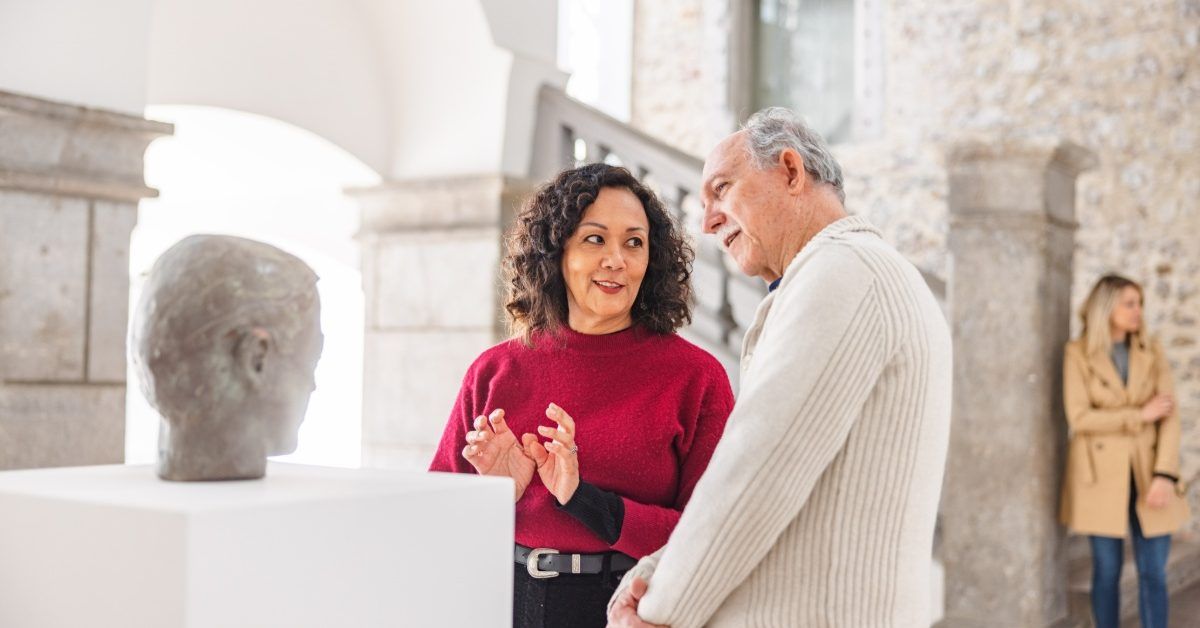
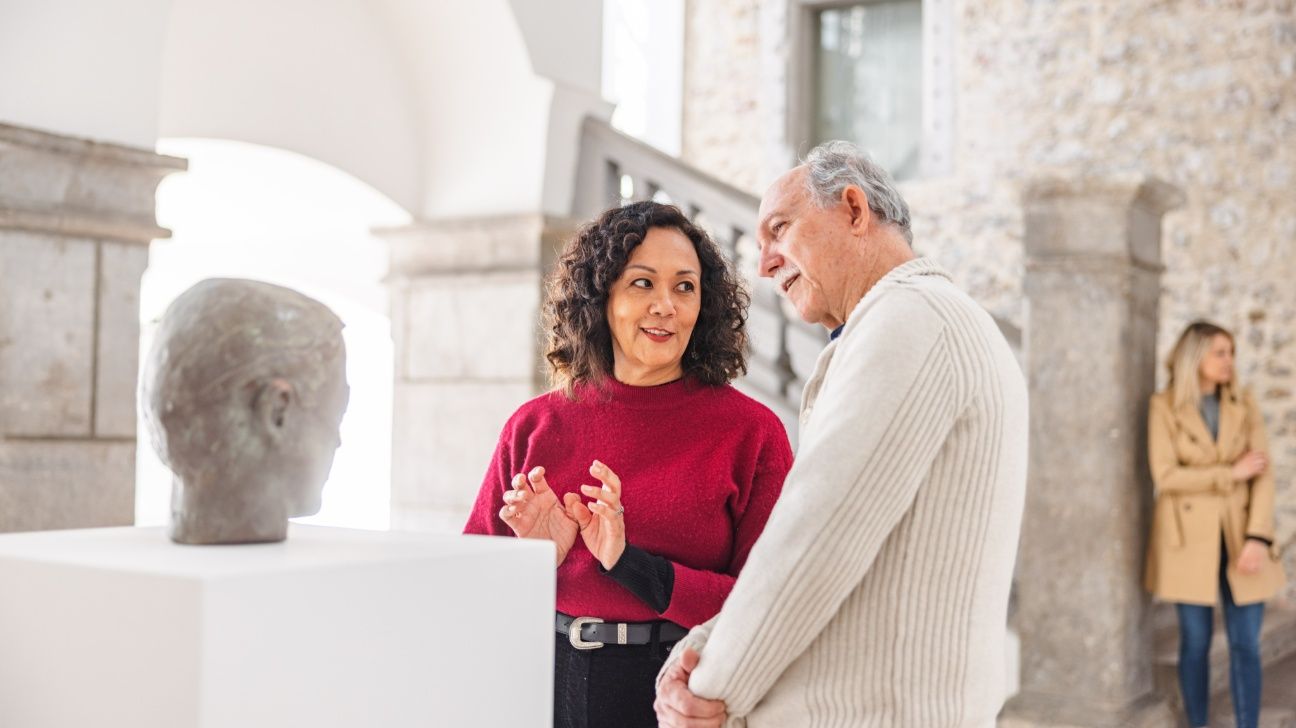
- A new study claims that older adults who regularly attend cultural events such as museums, movies, and theater tend to have a lower physiological age, meaning their bodies function younger than their years.
- Those who engaged culturally every few months or more had an average physiological age of about 3 years less than those with less participation, despite similar actual ages.
- There are various reasons cultural engagement may slow aging, including improved mental health.
Cultural engagement, such as attending the cinema, theater, or a museum, has been shown to improve overall mental and social well-being in older adults.
A study published on July 14 in the Journal of Epidemiology & Community Health has added to the extensive body of research showing how impactful participating in the arts can be for people’s overall health and may help them live longer.
Researchers at the Institute of Science, Tokyo, found that older adults who remained culturally engaged tended to have a lower physiological age, also known as biological age.
In other words, the more people participated in cultural activities like museums, theatre, or movies, the younger their bodies appeared to function.
How cultural engagement slows physiological age
The team analyzed data from people 50 and older living in England, using data from the English Longitudinal Study of Ageing.
The study found people who took part in cultural activities at least once every few months had an average physiological age of about 66.9 years, compared with 69.9 years for those who engaged less often — a gap of roughly 3 years.
Their actual ages were much closer together (68.7 versus 70.3), which means the more engaged group’s bodies were functioning younger than their birth dates would suggest.
The researchers scored cultural engagement based on how often participants went to the cinema, museums or art galleries, and the theater, concerts, or the opera.
The study identifies three ways cultural engagement might slow physiological aging:
Strengthens social relationships
Cultural activities often bring people together, and that community interaction helps build social ties. According to a 2019 British study, people who regularly engage in these activities face a lower risk of loneliness over time.
Promotes healthier habits
The study’s authors note that people who engage in cultural events are more likely to eat well and be physically active.
Improves mental health
Cultural engagement can help reduce psychological distress and support better overall mental well-being, the researchers report. They add that lower stress and distress levels are directly tied to slower physiological aging.
Still, the study’s authors caution that these findings don’t prove cause and effect and said further research is needed. They acknowledge the possibility of reverse causation, meaning people who are already healthier and aging more slowly may simply have more energy and ability to participate in cultural activities in the first place.
The researchers said the most engaged people were more likely to be females, have higher incomes, be employed, and be in better health to begin with.
What is physiological age?
Physiological age (PA) measures how well someone’s body is functioning, rather than just counting the years since they were born. Two people can be the same age on paper, but their bodies might be aging at very different speeds depending on their health.
To determine someone’s PA, researchers used a method that combines health measurements from five body systems into a score. Here’s what each system measures:
- Heart and blood vessels: blood and pulse pressure readings
- Lungs: how much air a person can breathe out in one breath
- Blood: oxygen-carrying protein levels and a clotting-related protein
- Metabolism: blood sugar levels and cholesterol
- Muscles and bones: weight relative to height, hand grip strength, and walking speed
A higher physiological age is linked to a greater risk of disease and death. A 2025 study using data from the U.S. Health and Retirement Study, which tracks 20,000 people in America, found that physiological age predicts mortality in older adults more accurately than chronological age.
Community arts programs improve health in older adults
The findings align with research conducted in the United States. The 2006 “Creativity and Aging Study” found that community-based arts programs had “powerful positive intervention effects” on older adults’ health.
Cultural institutions like the High Museum of Art in Atlanta create programming specifically for aging adults. Andrew Westover, the museum’s director of learning and civic engagement, said their Culture Collective programs are designed specifically for people 50 and over, “around the idea that people are always learning and growing.”
“There [are] all of these ways that gathering at the museum, because of its unique characteristics, encourages people to keep growing and keep asking questions.”
He told Healthline the museum aims to create spaces where “people’s brains are constantly tickled,” prompting them to be curious. That curiosity could look like participants in a screen printing or color theory workshop asking the instructor to show them how they executed a specific brush or, something more conceptual, like how the contrast of light and shadow can reflect a person’s life.
“At one level, you’re talking about technique,” Westover said. “At one level, you’re talking about just visual acuity. But at another level, you’re talking about how do you think about your own life and mortality, and how do you talk about that with your friend in a way that isn’t supercharged?”
“It’s an opening that lets you go as far as you want to, and you can always go further if you want to, but it’s not required. And I think that’s a really important part of these conversations, too,” he continued.
Westover noted that the museum’s own research shows program participants “feel more connected to themselves, and more connected to one another, simply by coming to the program.”
“People who come alone will say, ‘I felt more in sync with the people around me, even if I didn’t talk to them, because we were in this space where we were moving together,’” he said.
Leave a Reply