
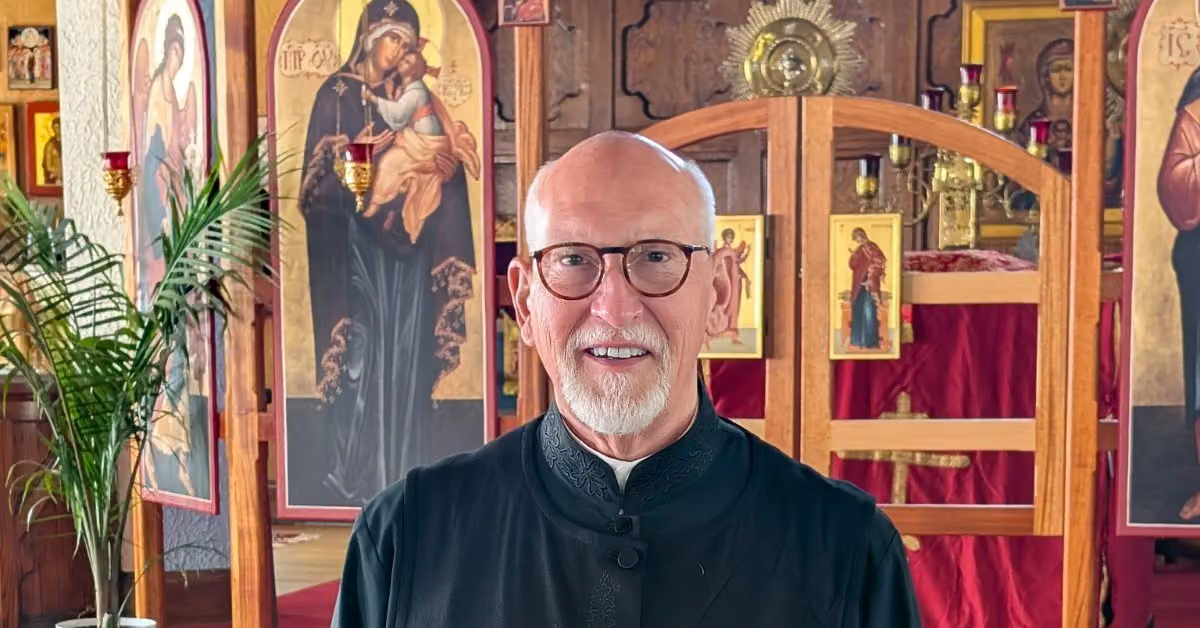
- Former competitive weightlifter Dana Bichler lost more than 80 pounds after undergoing endoscopic sleeve gastroplasty (ESG), a minimally invasive weight loss procedure.
- After struggling with weight regain despite dieting and trying GLP-1 medications, Bichler pursued ESG amid concerns about his obesity-related fatty liver disease.
- Bichler says the procedure helped him regain his energy, become more physically active, and enjoy activities with his family that had become difficult because of his weight.
For years, Dana Bichler was a competitive weightlifter. He felt fit and strong competing at 200 to 210 pounds. But wear and tear on his body and aging eventually pushed him to step away from weightlifting. Without the training, he began to gain weight slowly and steadily.
“I tried running, and a few other things, and the weight just crept up,” he told Healthline.
Dieting allowed him to lose about 50 pounds, but he would then regain it. At his heaviest, he weighed close to 300 pounds, which inspired him to visit a weight-loss clinic, where he followed a plan centered on the clinic’s foods.
“It’s a life of deprivation,” Bichler said. “You just can’t live like it.”
“There was really no long-term positive effects or benefits that I saw,” he said.
Bichler understood the seriousness of the condition as his two younger sisters and his oldest brother also had fatty liver disease. His brother and youngest sister developed cirrhosis, and his brother died after the disease affected other parts of his body.
“I had to do something,” he said. “What I was doing was not working.”
During ESG, a doctor passes an endoscope through the mouth and uses sutures to fold the stomach into a narrower sleeve. No portion of the stomach is removed, and there are no incisions. The smaller stomach limits how much a person can eat at once.
“Patients typically go home the same day and can return to routine daily activities within two to three days,” Brian Dunkin, MD, chief medical officer at Boston Scientific, told Healthline. “For the right person, that provides another less-invasive option to consider with their healthcare professional.”
While ESG may be a good option for some people who don’t achieve weight loss goals with GLP-1 medications, can’t tolerate them, or don’t want to stay on medication long term, Dunkin said he doesn’t think of it as ESG versus GLP-1 drugs.
“One of the best things GLP-1 medications have done is get more people talking to their doctors about obesity and recognizing it as a chronic disease that deserves treatment,” he said.
Each approach has different benefits, risks, and side effects.
“The goal is finding the right treatment, or combination of treatments, for the right patient at the right time,” said Dunkin.
ESG is indicated for adults with obesity with a BMI between 30 and 50, but Dunkin said BMI is only part of the conversation. ESG may be an option for people who aren’t getting the weight loss results they want, who don’t want to stay on weight loss medication long term, or for whom bariatric surgery may not be appropriate or desired, he added.
“Obesity is a chronic disease that requires long-term care,” said Dunkin. “ESG is one part of that care, which is why I believe so strongly in a multidisciplinary approach. The goal is to look at the whole person and find a care plan they can sustain over time.”
In March 2025, Bichler decided ESG was a good fit for him and received the procedure at Boston Scientific. At the time, he was 67 years old and on Medicare, which pre-approved the procedure.
“I just felt comfortable with it not being invasive, and I really needed to deal with [my weight], so I did,” he said.
When Bichler underwent ESG he weighed somewhere in the 260s. Today, he weighs 178 pounds.
While the procedure went smoothly, he said the following month was difficult. Because bread, pasta, rice, and carbonated drinks were off the table, he had to consume clear liquids, then slowly moved to other liquids, and eventually cream soups.
“I found that extremely difficult,” he said.
What surprised him most was depression. Looking back, he calls it a perfect storm. Working with his weight loss doctor, he had stopped taking his antidepressant about two weeks before the procedure. After surgery, his eating habits changed dramatically, disrupting the social life he’d built around food.
“I was in a pretty deep funk for a while,” he said. “I really was.”
He restarted his antidepressant, and over time, he adjusted to a new way of eating.
“I’ve discovered I like cream soup,” he said. “I still have it for meals.”
Although he’s lost more than 80 pounds, Bichler said the bigger change is how good he feels. He exercises four to five days a week and has more energy and moves more easily than he has in years.
“I haven’t felt this good in 30 years,” Bichler said. “I’m not kidding you.”
He’s able to enjoy things he loves like working on the farm he and his wife own. At the farm, he hunts ducks, turkeys, pheasants, and small game, and runs a trapline, all activities his weight had made nearly impossible for a long time.
“It used to be really hard for me to do because of the physicality of doing some of these things,” he said.
Although he retired from his profession, Bichler said he’s busier than ever. He’s a protodeacon in the Eastern Orthodox Church and also serves as a chaplain for his local police department, a role that has him climbing in and out of squad cars and up and down steps.
“Before I’d be sucking air trying to keep up,” he said.
Most meaningful of all is that he has more energy to give to his family.
“I have a grandson that I can actually do things and be active with now,” Bichler said. “It’s like starting all over. I just feel like a new person.”
Leave a Reply