
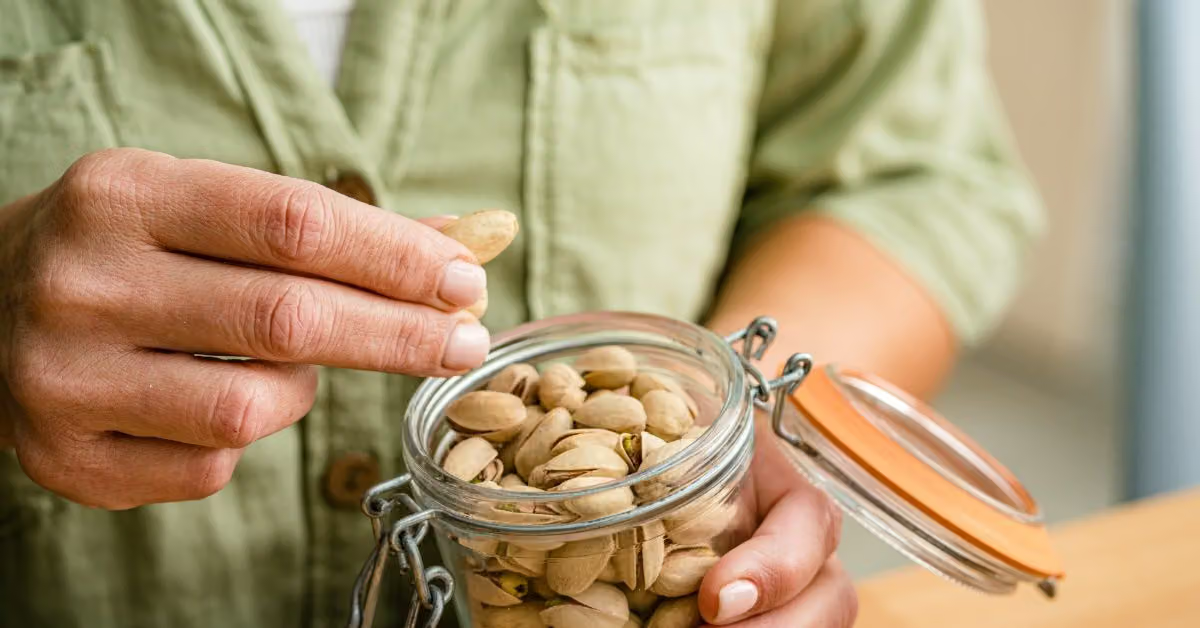
- A narrative review of current evidence suggests that pistachios may help support sleep.
- Pistachios contain nutrients associated with sleep health, including tryptophan, vitamin B6, magnesium, phytonutrient melatonin, fiber, and polyphenols, which may influence sleep-related biological processes.
- Studies of tryptophan supplements and dietary polyphenols suggest potential sleep benefits, but these findings do not establish that eating pistachios improves sleep.
- More human clinical trials are needed before pistachios can be recommended as a sleep aid.
Could a handful of pistachios before you go to bed really help you sleep better?
Pistachios contain several nutrients linked to sleep-related processes, prompting an investigation into whether they might offer benefits beyond their nutritional value.
While the findings suggest that pistachios may support sleep, the evidence is inconclusive and warrants further study.
“Pistachios are compelling for sleep research because they bring together several nutrients and plant compounds connected to sleep physiology within one whole food,” said study author Marie-Pierre St-Onge, PhD, professor of nutritional medicine and director of the Center of Excellence for Sleep & Circadian Research in the Department of Medicine at Columbia University Institute of Nutrition, in a news release.
“Rather than focusing on a single ‘sleep nutrient,’ this review provides a rationale for studying how the complete pistachio food matrix may affect sleep-related pathways,” she continued.
The narrative review examined existing research on pistachios and sleep-related biology.
The researchers explored whether the combination of nutrients in pistachios could promote quality sleep.
Rather than identifying pistachios as a sleep remedy, the researchers outlined biological pathways through which their nutrients and bioactive compounds might influence sleep.
“We were particularly interested in pistachios because they are particularly high in phytomelatonin, polyphenols, and carotenoids, which we noted were plant-derived components that had been shown to have sleep benefits in preclinical studies,” St-Onge told Healthline.
“We also noted their high content of tryptophan and vitamin B6, which are relevant to melatonin production in humans,” she continued.
Pistachios contain several nutrients associated with sleep, including melatonin, which helps regulate the sleep-wake cycle.
- Tryptophan: A 1-ounce serving of pistachios contains about 71 milligrams (mg) of this essential amino acid, which the body uses to produce serotonin and melatonin.
- Vitamin B6: This vitamin helps the body process amino acids and supports pathways involved in neurotransmitter production.
- Magnesium: Pistachios provide about 31 mg per ounce. Magnesium can help support several bodily functions, including nervous system regulation.
- Phytomelatonin: Pistachios contain plant-based melatonin, but its absorption and effects in humans remain uncertain.
- Fiber and polyphenols: These compounds may influence gut microbes and the gut-brain axis, potentially affecting sleep regulation.
Other studies examining the effects of some of these nutrients on sleep offer further context.
A 2021 systematic review and meta-analysis of tryptophan supplementation found that it may reduce wakefulness after sleep onset, particularly at doses of at least 1 gram (g) daily. However, an ounce of pistachios supplies only about 71 mg, which is much less than the doses examined by the researchers.
Additionally, a 2023 review of dietary polyphenols led by St-Onge identified potential links between plant compounds and sleep outcomes, although results varied across studies.
Neither review established that polyphenols or tryptophan from pistachios specifically affected sleep quality.
“I was not surprised that pistachios may help support sleep, given their combination of nutrients involved in sleep regulation,” said Michelle Routhenstein, MS, a preventive cardiology dietitian at EntirelyNourished, who wasn’t involved in the study.
“Pistachios provide tryptophan, an amino acid the body uses to produce serotonin and melatonin; vitamin B6, which supports these pathways; and magnesium, which plays a role in nervous system function and sleep regulation,” she told Healthline.
The new review highlights the concept of the “food matrix,” or how nutrients and bioactive compounds interact within a whole food.
Instead of investigating tryptophan, magnesium, or melatonin individually, researchers were curious about the combined effects of consuming them together in pistachios.
Laboratory and simulated-digestion research offers clues about how fiber and plant compounds in pistachios and peanuts interact with gut microbes. However, these findings do not establish that eating pistachios changes sleep quality in real-world conditions.
Broader nutrition research also points to a relationship between diet and sleep.
A 2021 review in the Annual Review of Nutrition examined evidence linking dietary patterns and individual nutrients to sleep outcomes. The findings suggest a relationship between sleep and diet, but note that more research is needed to determine cause and effect.
In a nutshell, the current evidence builds a compelling case for pistachios as a sleep aid.
“Sleep difficulties can have different underlying causes,” Routhenstein noted. “If inadequate intake of these nutrients is a contributing factor, pistachios may help, but they may not address sleep issues related to other nutrient deficiencies or other causes.”
Much of the supporting evidence cited in the review comes from studies of individual nutrients, other foods, laboratory experiments, or biological mechanisms rather than from trials involving whole pistachios.
Researchers have also reported significant variations in the melatonin content of pistachios, making the amount in a typical serving difficult to pinpoint.
Additionally, the review received support from American Pistachio Growers, and the corresponding author, St-Onge, serves on its advisory board. Larger studies and clinical trials are needed, ideally without industry funding, to ensure well-rounded results.
Indeed, the authors call for randomized controlled trials examining whether eating pistachios affects sleep outcomes, including sleep quality, duration, and melatonin levels.
“This was a review; we noted that the complete profile of pistachios would make them well-suited to support healthful sleep, but research is needed to evaluate this,” St-Onge told Healthline.
“This is the next step, and something we are actively working on. We also need to better understand what dosage and frequency of consumption would be optimal.”
Regardless, a handful of pistachios is still considered a healthy choice as part of a balanced diet.
“A small handful, about 1 ounce of shelled pistachios, is an appropriate portion,” Routhenstein said. “Enjoy them during the day or as a light afternoon or evening snack when you’re hungry.”
If nutrients like tryptophan help promote sleep, it’s possible that other nuts could yield similar results.
“Other nuts, such as almonds and walnuts, may offer similar benefits because they also contain nutrients involved in sleep regulation,” Routhenstein said.
“Early research is encouraging, but it’s too soon to say how much they might help.”
Other foods, like turkey, also contain tryptophan.
“For someone allergic to nuts, foods such as tofu, beans, oats, eggs, dairy, and fish can provide tryptophan, which the body uses to make serotonin and melatonin,” Routhenstein said. “The goal is to meet their nutrient needs rather than rely on one food to improve sleep.”
Sleep health depends on multiple factors. As such, Routhenstein recommends a personalized approach to getting better sleep, from what you eat and when you eat to addressing any nutritional gaps.
“I would also encourage regular, balanced meals throughout the day to support blood sugar management, especially for those with diabetes, while avoiding large meals close to bedtime,” Routhenstein said. “Caffeine later in the day and alcohol in the evening are also worth considering as possible sleep disruptors.”
Leave a Reply