

- Just one or two isometric exercise sessions per week may help lower blood pressure in the short term, according to a new study.
- Performing isometric exercises, such as wall squats and planks, three times a week may provide long-term benefits.
- Experts say people beginning an isometric exercise program should start slowly and build up their routine over time.
Isometric exercises, even if done only occasionally, could help improve blood pressure, according to a new study.
Researchers report that study participants who did these types of exercises once or twice a week saw reductions in blood pressure over a short period.
They added that participants who engaged in isometric exercises three times a week maintained improvements in blood pressure over a longer period.
The researchers said that
However, they said previous research had not established how often isometric exercise training needs to be performed to maintain these health benefits.
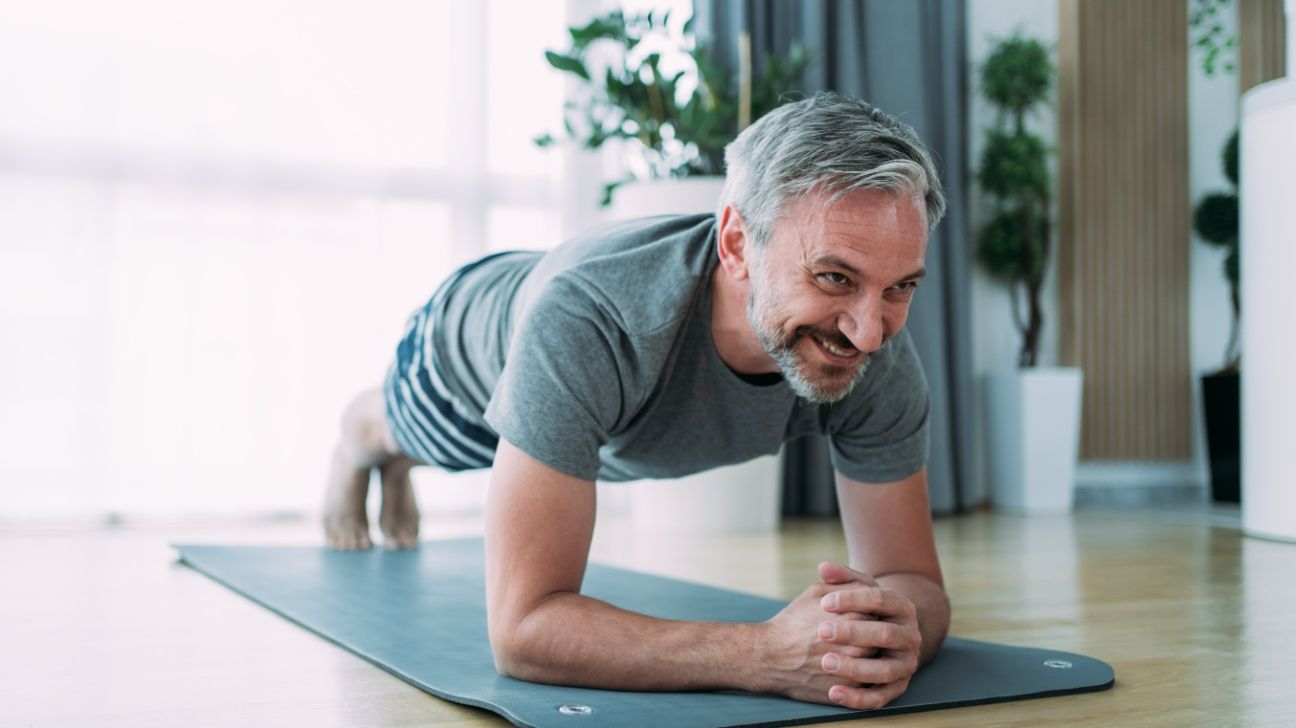
Isometric exercises involve a person holding a pose for a few minutes at a time. Examples include wall squats and floor planks.
The researchers said their study provides important information for people who don’t have time to exercise daily.
The researchers wrote that the study “offers evidence that lower frequency [isometric exercise training] can help maintain short-term [blood pressure] reductions, providing a pragmatic option for individuals with limited time or adherence challenges.”
Experts not involved in the research said it provides helpful guidance for people who want to improve their blood pressure.
“The main takeaway is that you don’t need to exercise every day — or even several times a week — to experience significant blood pressure benefits from isometric exercise,” said Michael Fredericson, MD, a professor of orthopaedic surgery at Stanford Health Care.
“We already knew that performing isometric training for even just a few weeks can lower blood pressure,” added Amanda Paluch, PhD, an associate professor of kinesiology at the University of Massachusetts Amherst and chair of the American Heart Association’s Physical Activity Committee. “This study adds to the research by looking at how much training is needed to maintain those gains.”
“It is encouraging to see measurable improvements in blood pressure with a relatively brief and infrequent exercise routine,” said Jennifer Wong, MD, a cardiologist and medical director of Non-Invasive Cardiology at MemorialCare Heart and Vascular Institute at Orange Coast Medical Center in California. “These findings suggest that even small, consistent efforts can make a meaningful difference.”
The Centers for Disease Control and Prevention (CDC)
The condition, also known as hypertension, increases the risk of heart disease and stroke.
High blood pressure occurs when the force of blood pushing through blood vessels is consistently too high.
Blood pressure readings consist of two numbers. One is the systolic pressure (top number), which measures pressure when your heart beats. The second is diastolic pressure (the bottom number), which measures the pressure between beats.
Treatment usually involves medications such as beta-blockers and ACE inhibitors, as well as lifestyle factors such as a healthy diet and exercise.
In their study, the researchers aimed to determine how much isometric exercise was needed to lower and maintain blood pressure.
The researchers recruited 100 adults with an average age of 37. Subjects included male and female participants with normal-to-high-normal systolic blood pressure (120–140 mm Hg) who engaged in less than 150 minutes per week of moderate physical activity.
The participants also had no injuries or illnesses, were not taking and had not previously taken blood pressure medication, were not smokers, and did not consume more than 14 units of alcohol per week.
The participants were divided into five groups. One group served as a control and did no isometric exercise, while the other four groups followed the same four-week home-based lower-body isometric training program.
The regimen consisted of four sessions of isometric wall squat exercise, separated by two minutes of seated rest, performed three times a week.
During the next four weeks, the participants were split into four training schedules.
One group continued to exercise three times a week. A second group exercised twice a week, while a third group exercised once a week. The remaining group stopped the exercises entirely.
Blood pressure, heart rate, and other cardiac measurements were taken at the start of the study and after four weeks and eight weeks.
The researchers reported that the four groups who completed the initial four-week exercise routine showed significant reductions in systolic and diastolic blood pressure compared to the control group.
Over the next four weeks, the researchers found no statistically significant difference in diastolic blood pressure among the groups.
However, the researchers reported that participants who continued isometric exercise training three times a week achieved the greatest reduction in systolic blood pressure compared with baseline. That group also maintained improvements in other cardiac measures.
The group that had stopped doing isometric exercises after the initial four-week period showed a reversal of their blood pressure improvements.
The researchers wrote that the study “demonstrates that while lower frequency [isometric exercise training] may be sufficient to maintain [blood pressure] reductions over the short term, higher frequencies are required to preserve these benefits and the associated vascular and cardiac autonomic adaptations.”
The researchers noted that the eight-week study period was limited and that further research is needed. They also acknowledged that the participants were from a relatively small cross-section of people.
There are several ways isometric exercises may help lower blood pressure.
“Repeat isometric exercises (contracting a muscle and holding a position) seem to change how the blood vessels regulate pressure between workouts,” said Kevin Shah, MD, a cardiologist and program director of Heart Failure Outreach at MemorialCare Heart & Vascular Institute at Long Beach Medical Center in California.
“Blood pressure comes down to how hard the heart pumps and how much resistance the blood meets in the vessels,” added Paluch.
“Research suggests isometric training works mainly on that second part. It helps your blood vessels relax and open up, so blood flows through more easily.”
“Isometric exercise seems to promote cardiovascular adaptations that can lower blood pressure,” explained Fredericson. “Over time, this training can enhance the cardiovascular system’s ability to regulate blood pressure.”
Experts interviewed by Healthline say that the wall squats used in the study are one of the most beneficial isometric exercises.
They also recommend static leg extensions, handgrip exercises, planks, and exercises that involve sustained muscle contraction.
“Start slowly, with manageable goals,” Wong said. “Even one or two short sessions per week can be a starting point,” she said. “Begin with brief holds, allow adequate rest between sets and sessions, and gradually build up as strength and comfort improve. The goal is to establish a routine one can maintain consistently.”
Paluch recommended starting small and keeping it simple. She says 10 to 20 minutes per session is sufficient.
She suggested four 2-minute holds of a wall sit or handgrip squeeze with 2 minutes of rest between each hold. Those can be done two to three days a week.
“The message is that consistency matters,” she said. “If you’re able to maintain three times a week, that appears to be the best way to maintain the gain, but it’s not an all-or-nothing situation.”
“You don’t have to maintain the initial pace forever to get something out of the training, especially when life gets in the way and adherence or time becomes a challenge,” Paluch added. “Even getting in one day a week is better than nothing.”
For those just getting started with exercise, Shah recommended starting with a short walk before adding isometric exercise.
“A 10-minute walk on most days is a manageable first step,” Shah said. “Gradually increase the length of walks and then add strength training. Consistency matters more than an exhaustive routine that is not sustainable. Remember: Progress and not perfection.”
Fredericson advised starting slowly and building from there.
“For someone completely inactive, even 5 to 10 minutes of movement per day is a meaningful starting point,” he said. “Walking is an excellent option because it requires little to no equipment or preparation. From there, they can incorporate strength training two or three days a week.”
Leave a Reply