
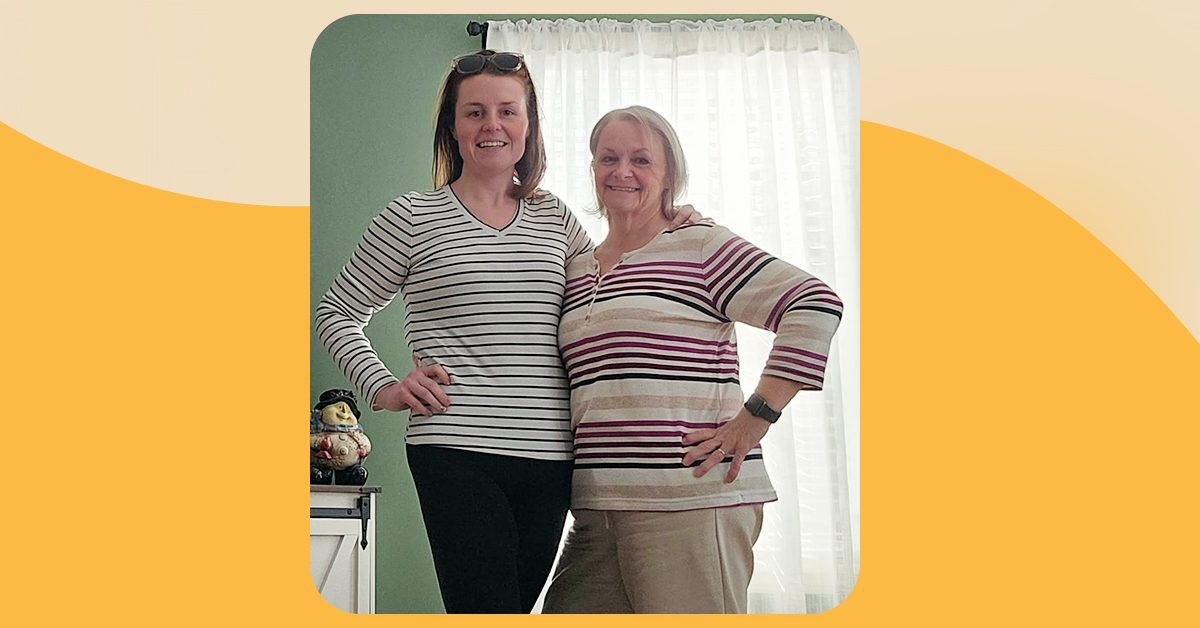
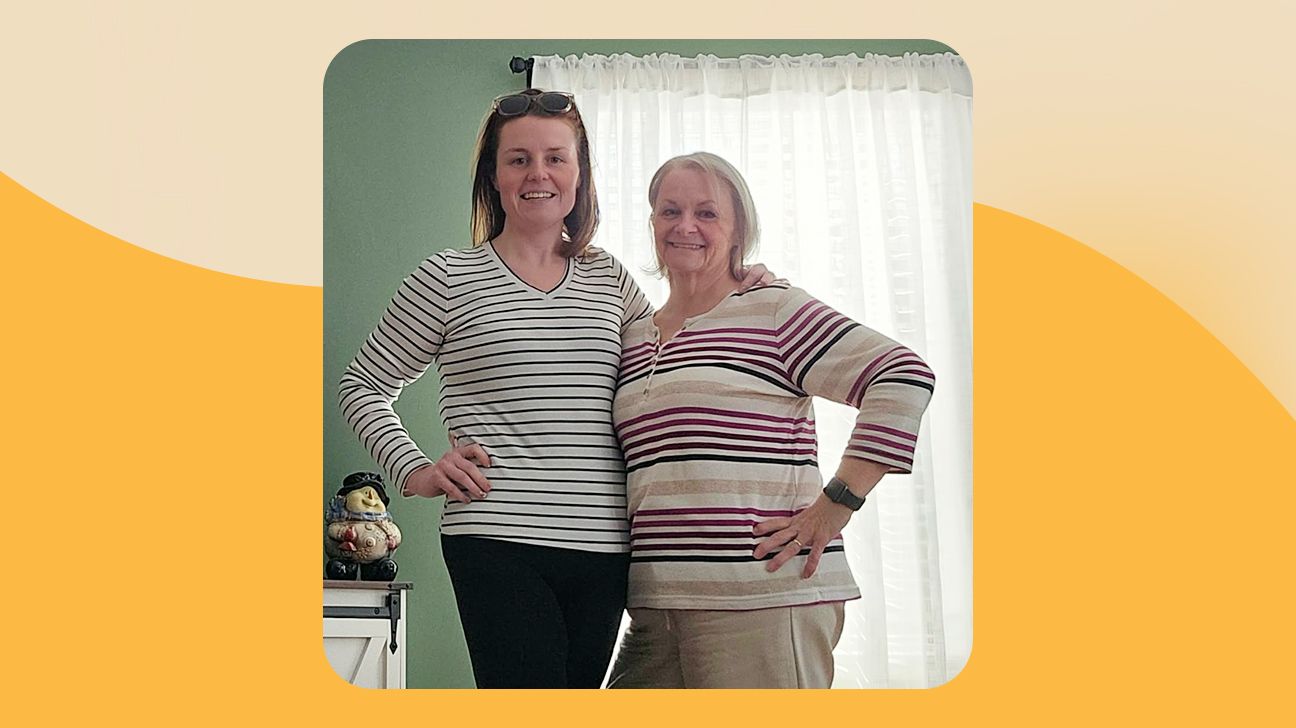
- A mother and daughter teamed up to undergo the same noninvasive weight loss procedure after years of difficulty with weight management.
- After Molly Madore’s success following an endoscopic sleeve gastroplasty (ESG), her mother, Diane Madore, underwent the same procedure, resulting in a combined 163-pound weight loss.
- The mother-daughter duo wants others to know about this noninvasive, non-medication weight loss strategy.
Molly Madore and her mother, Diane Madore, navigated weight management for most of their lives.
Molly, 34, said she can’t remember a time when managing her weight wasn’t a concern. “I’ve been overweight my whole life,” she told Healthline. “I’ve never had to chase a weight I once was because I’ve always been trying to lose weight.”
As a teenager, she tried eating salads and making small changes. In her early 20s, she moved on to protein shakes, meal supplements, and other diets. However, no matter what she tried, she always fell into the same pattern.
“As soon as I’d fail one meal, I felt like I failed the diet completely,” she said. “And then I’d be like, ‘Well, I’ll start Monday,’ and then Monday would roll around, and I just wouldn’t continue.”
Then, in late 2023, she saw a Facebook advertisement for GLP-1 injections. She went to a local health facility and received a prescription. However, after experiencing GI side effects, she considered stopping the medication.
Around the same time, while taking an elevator at the hospital where she works as a medical assistant, Molly saw a poster for endoscopic sleeve gastroplasty (ESG), a minimally invasive weight loss procedure that reduces stomach volume by 70–80% to limit food intake.
The procedure is done during an endoscopy that includes a flexible scope for the physician to place sutures inside the stomach, reducing its size to cause fullness without the need for cutting or incisions.
The approach was appealing to Molly. Compared with GLP-1 medications, a nonsurgical ESG procedure may be more effective in the long term.
“Medication effects typically wear off after they are stopped and can result in recurrent weight gain,” said Rabia De Latour, MD, associate professor at NYU Grossman School of Medicine.
“By reducing the volume of the stomach with [an ESG], one creates restriction and promotes satiety, or fullness, with less food.”
Molly decided to undergo the procedure, and the results were so successful that her mother, Diane, soon followed suit.
Diane, 59, underwent the procedure in September 2025, aiming to reach her goal weight before her 60th birthday. Here, this mother-daughter duo shares their weight loss success stories after an ESG procedure.
People with obesity who have a body mass index (BMI) of 30–50 and an interest in nonsurgical, minimally invasive options are considered ideal candidates for ESG.
In the summer of 2024, Molly moved forward with an ESG consultation and planned to schedule the procedure once she received insurance approval.
“At that time, they weren’t quite sure that I’d even be approved, just because I didn’t have too many comorbidities,” she said. “And it was going to be the first time they were performing it at our facility; it was brand-new, first in the state, actually.”
While she waited to hear back from her insurance company, Molly continued taking GLP-1 injections through October 2024. In early November, she got the OK to proceed with ESG, and her procedure was scheduled for December 2024.
Despite waking up to a snowstorm on the day of her ESG, all went as planned for Molly, and she recovered quickly.
She had the procedure on a Thursday and was back at work on Monday. “I wasn’t in pain by any means,” she said. “I just was mindful of what I had just gone through.”
For the first week, she wore a heated vest to work for extra comfort and took prescribed medication to help manage stomach muscle spasms. The most common side effects from an ESG procedure are gastrointestinal symptoms, such as:
These symptoms typically resolve within 30–60 days.
In addition to ESG, other available options for stomach volume reduction and satiety promotion via restriction include:
“[Choosing a method] is a personal decision and should be made through counseling with your clinician to allow you to make the right decision for you based on your health, your priorities, availability of procedure, recovery expectations, and comfort with the intervention,” De Latour told Healthline.
Since December 2024, Molly has lost 86 pounds and currently weighs 146 pounds. She said she has more stamina and energy than ever before.
“It’s never a weight that I ever stepped on the scale and saw,” she said. “Maybe in middle school. Every single day, I do so much more. And if I think back to where I was two years ago, trying to do the things I do now, I would have been exhausted. I feel [so much] better.”
While ESG helped get Molly to this point, she said she has more work to do. “I’m proud to say that it’s a tool,” Molly said. “It’s not the end of your journey. It’s the start of the journey. And if you use it and go into it with the right mind frame, you can be very successful with it.”
After witnessing Molly’s success with ESG, her mother, Diane Madore, decided to have the surgery, too. Diane said she gained weight after having her two children and quitting smoking. “That excuse wore out after a while,” she said.
Over the years, she tried weight loss shakes, supplements, and various exercise regimens. “It was just so easy to fall off the wagon,” said Diane.
While she was aware of GLP-1 drugs, Diane said she wasn’t taking any medication and didn’t want to start with a GLP-1. “Plus, I was excited for ESG after seeing how effective it was for Molly,” she said.
Diane had her ESG in September 2025. Her recovery mirrored her daughter’s almost exactly. She had the procedure on Thursday, took Friday off, and was back to work Monday. To date, she has lost 77 pounds.
“It feels good to feel good,” Diane said. “That was my motto through this process.”
Diane appreciates small changes with big impact, like walking up the front steps of her house carrying a case of water without having to take it one step at a time. “I have the strength,” she said. “That’s fantastic.”
Going through the process of losing weight, eating differently, and experiencing life in a new way with her daughter is a unique, special experience, she said. She enjoys clothes shopping with Molly now, something that wasn’t fun in the past.
“You go into the fitting room, and you look at something and go, ‘That isn’t gonna fit me,’ and Molly’s like, ‘You need to go try it on,’” Diane said.
Molly said that, in addition to the benefits, she appreciates holding each other accountable. “My mom’s a couple steps behind me, so I can explain to her what this process is that she’s going to go through,” she said.
Today, Molly and Diane are on a mission to advocate for noninvasive weight loss procedures like ESG.
For some people, this procedure may also offer an alternative to anti-obesity medications.
Of course, results from any weight loss strategy may vary from person to person, which is why experts advise adopting healthy lifestyle choices to promote weight management.
But for Molly and Diane, ESG was key to their weight loss success.
“Nothing commits you,” Molly said. “Just set up a consult, ask your questions, find out what you want to know about it.”
Diane said she wants others to know that ESG changed her life. “I can sleep through the night now. I can do so much more. And it really wasn’t hard to do,” she said.
Leave a Reply