

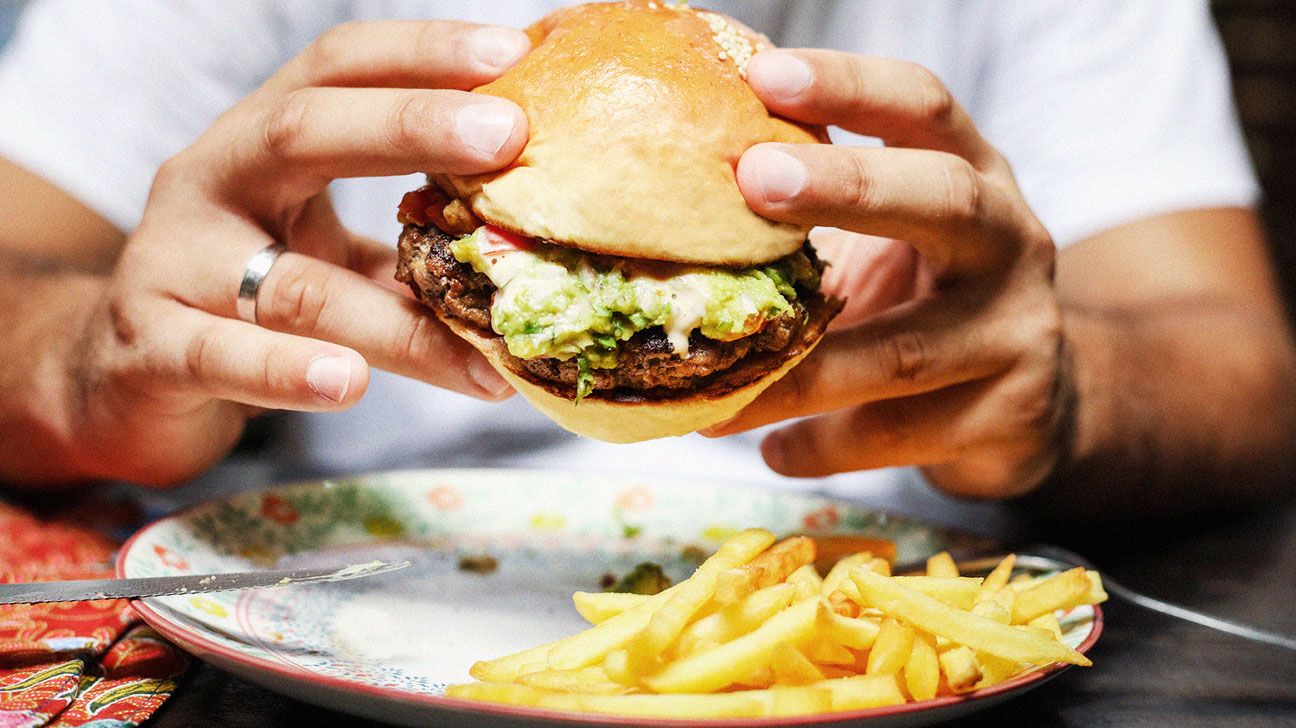
- Drinking alcohol may lead to increased consumption of ultra-processed savory foods.
- Researchers found that alcohol can amplify the FGF21 hormone, which can cause cravings for protein and savory foods.
- Natural cravings for protein may be disrupted due to the widespread availability of ultra-processed foods that taste savory but lack protein.
Drinking alcohol may cause people to over-consume savory ultra-processed foods.
Researchers at the University of Sydney found that alcohol consumption may amplify a biological drive for salty, umami-flavored foods. The findings were recently published in
“Many people will recognise the experience of having a few drinks and suddenly craving something salty, like chips, French fries, pizza or other savoury foods. Now we have a better understanding of the hormonal dynamic at play, which may be driving overconsumption of ultra-processed foods,” Amanda Grech, lead study author and a researcher at the Charles Perkins Centre at the University of Sydney, said in a press statement.
The research dovetails with mounting evidence showing that alcohol consumption in any amount is associated with negative health outcomes.
If you choose to enjoy alcohol in moderation, here’s what you should know about pairing alcohol with your diet.
They found that more savory foods were consumed on drinking days than on non-drinking days.
For every standard drink consumed, there was an increase in savory food intake as well as a reduction in sweet food intake.
The researchers say that drinking alcohol triggers an increase in levels of a hormone known as FGF21. This can cause cravings for salty or savory flavors.
Traditionally, the human body associates savory flavors with protein-rich foods. But the researchers note that in the modern food environment, this association can be disrupted by the availability of umami and savory flavors in ultra-processed foods that are low in protein.
The availability of ultra-processed savory foods, often artificially flavored, can act as a “protein decoy,” tricking the body into seeking foods that might taste like they are protein-rich but don’t actually deliver protein.
As a result, people may consume more food to satisfy their cravings, leading to greater intake of total energy, carbohydrates, and fats.
“Our study suggests that when dietary protein is diluted, people compensate by eating more overall to satisfy the increased protein appetite induced by alcohol,” David Raubenheimer, senior study author and a researcher at the Charles Perkins Centre, said in a press statement.
“In this way, alcohol may contribute to overeating particularly when ultra-processed, low-protein savory foods are readily available,” he continued.
Wesley McWhorter, DrPH, MS, a spokesperson for the Academy of Nutrition and Dietetics, explained that hormones may play a role in food cravings associated with alcohol use. McWhorter wasn’t involved in the study.
He cited FGF21, a metabolic hormone secreted by the liver that responds specifically to nutritional stress.
“The hormone story is one piece, but it’s not the whole story. Alcohol lowers inhibition, so people are more likely to make food choices they might otherwise avoid,” he told Healthline.
“Drinking often happens late at night, when people are tired, hungry, and making quick decisions — with limited options. There’s also the social environment; if everyone is ordering pizza or stopping for fast food, it becomes an easy default,” McWhorter said.
“Alcohol can also affect blood sugar and appetite, which may make people feel genuinely hungry. And with a hangover, people are often dehydrated, tired, and craving something salty and satisfying. So it’s biology, environment, and convenience. What this study adds is a possible explanation for why those cravings often skew savory and salty rather than sweet,” he continued.
The researchers note that alcohol can have different effects on total energy intake, depending on the “dietary environment” of the person consuming alcohol.
Whitney Linsenmeyer, PhD, a spokesperson for the Academy of Nutrition and Dietetics and an assistant professor of nutrition and dietetics at Saint Louis University, explained that food cravings associated with alcohol use may not be a bad thing if a person’s dietary environment has fewer ultra-processed foods and healthier options. Linsenmeyer wasn’t involved in the study.
“Craving protein is not likely to be problematic when you’re reaching for fresh, nutrient-dense, lean cuts of meat, such as a pork tenderloin, chicken breast, or fish,” she told Healthline.
Dana Hunnes, PhD, a senior clinical dietitian at UCLA Health, said that it’s no coincidence that ultra-processed foods can so easily satisfy a craving for something savory. Hunnes wasn’t involved in the study.
“Food companies that make processed/ultra-processed foods definitely aim for that umami flavor in their foods. They have food scientists creating the perfect flavor in the product, so it’s no mistake that they are packed with umami flavor. It is interesting that umami flavor can take the place of actual protein in that sense,” she told Healthline.
“The problem with this, though, is that ultra-processed foods are extremely calorie-dense, but nutrient-poor. So, high in calories, but low in vitamins [and] minerals that would be beneficial to your health. Also, ultra-processed foods are broken down so much from their original ingredients that your body barely has to work to break anything down, making it easy to pack it in,” Hunnes continued.
If choosing to drink in moderation, experts suggest having some healthier, protein-rich, and savory food options available.
“Some easy, quick protein sources to have on hand include protein shakes, tuna, hard-boiled eggs, yogurt, nuts, jerky, and protein bars,” said Mir Ali, MD, a bariatric surgeon, bariatric medicine specialist, and medical director of MemorialCare Surgical Weight Loss Center at Orange Coast Medical Center in Fountain Valley, California. Ali wasn’t involved in the study.
“Healthier savory or umami options include fresh vegetables, cottage cheese, avocado on whole grain toast, air-popped popcorn, beans, and lentils,” he told Healthline.
McWhorter said that occasional fast-food meals with drinks may be OK for some people. It’s when that becomes a regular habit that it becomes concerning.
“No one needs to panic over one slice of pizza after a couple of drinks. The concern is the repeated pattern over time, not one night out. The simple call to action is to avoid alcohol, eat real food most of the time, foods that actually deliver the protein, fiber, and nutrients your body is looking for,” McWhorter said.
“And if these patterns are showing up often, whether that’s late-night eating, cravings after drinking, or feeling out of control around certain foods, talk with a registered dietitian.”
Leave a Reply