
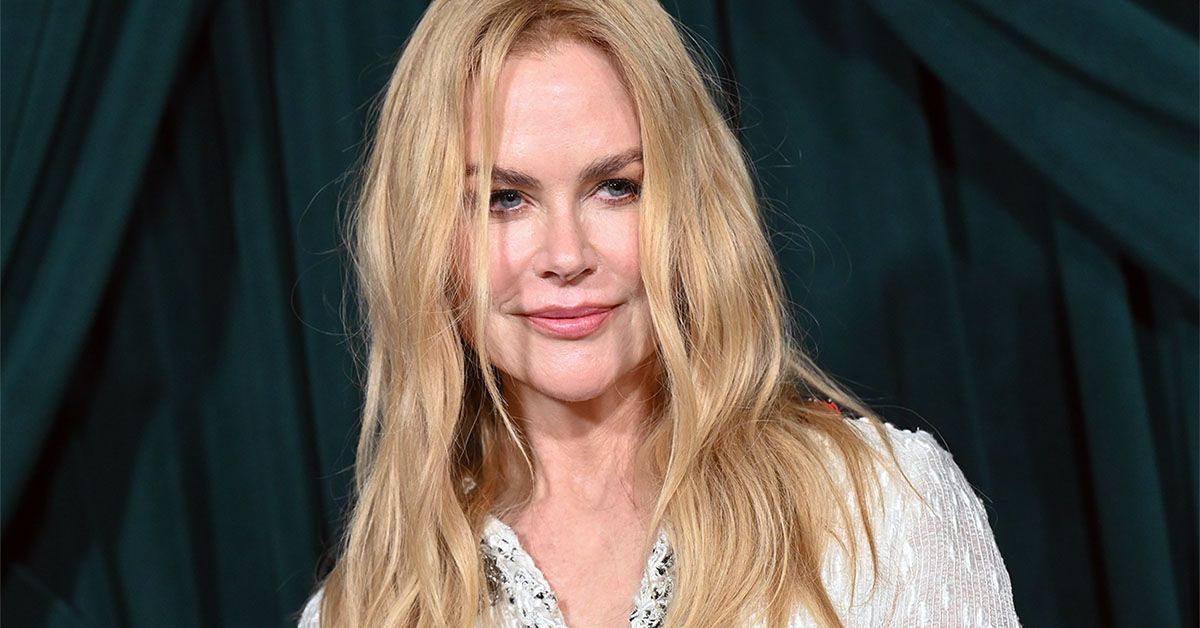
- Nicole Kidman says she’s training to become a death doula following her mother’s death in 2024.
- Death doulas provide non-medical support to people nearing the end of life, focusing on emotional, practical, and spiritual care.
- Experts say growing awareness is helping spark conversations about end-of-life care.
Nicole Kidman is drawing new attention to end-of-life care after revealing she’s begun training to become a death doula.
The Oscar-winning actor first shared the news during an appearance at the University of San Francisco, where she sat down for a conversation with journalist Vicky Nguyen as part of the university’s Silk Speaker Series, according to the San Francisco Chronicle.
Kidman said she was inspired to explore becoming a death doula following the passing of her mother in 2024, an experience that shifted how she thinks about support in a person’s final days.
“As my mother was passing, she was lonely and there was only so much the family could provide,” Kidman told attendees, per the Chronicle. “And that’s when I went, ‘I wish there was these people in the world that were there to sit impartially and just provide solace and care.’”
“So that’s part of my expansion and one of the things I will be learning,” she added.
Kidman later expanded on her decision and the public’s reaction to it during a HISTORYTalks event in Philadelphia.
“I did this talk recently where I said I’m expanding into learning to be a death doula, which seemed to have people confused or intrigued,” she said, according to The Hollywood Reporter.
Kidman explained that she finds the work of death doulas “fascinating” and “beautiful,” noting that “you have to be a certain personality to be able to do it. But I found out that I’m actually that personality.”
“It’s very important to me,” she continued. “There is always suffering, but if there are people there who can help with that, help those final stages be less painful — if you feel the connection in your heart, then that’s lovely. So that’s what I’m exploring.”
Kidman’s announcement is bringing increased visibility to the need for death doulas and how they can improve end-of-life care.
According to The International End of Life Doula Association, a death doula — sometimes referred to as an end-of-life doula — is “a nonmedical companion who provides personalized and compassionate support to individuals, families, and their circles of care as they encounter and navigate death, loss, and mortality.”
They also advocate self-determination and impart “psychosocial, emotional, spiritual, and practical care to empower dignity throughout the dying process.”
Unlike doctors, nurses, or other healthcare professionals, death doulas do not provide medical treatment. Instead, they often work alongside existing healthcare teams to offer a wide range of additional support.
This support can include sitting with someone in their final days, helping facilitate difficult conversations, or assisting with end-of-life planning, such as advance directives.
In addition to Kidman’s announcement, portrayals of death doulas in popular media are also bringing new attention to their role in healthcare.
A recent episode of the popular medical drama “The Pitt” featured a nurse acting as a death doula for a terminal patient as she navigated end-of-life care in the emergency department.
In a recent interview with Healthgrades, physician and death doula Shoshana Ungerleider, MD, said portrayals like those seen in “The Pitt” can have a real-world impact by helping people better understand end-of-life care and prompting them to think about their own wishes.
Ungerleider is also the founder of End Well, a nonprofit focused on improving end-of-life care, and has worked to educate the writers of “The Pitt,” helping guide the show’s depiction of end-of-life moments.
That growing awareness, she said, also highlights a deeper issue in how end-of-life care is delivered, and why she founded End Well.
“I saw a gap between how we die and how most of us say we want to die,” Ungerleider said. “Over and over, I witnessed patients spending their final days in environments that felt impersonal and overly medicalized. Conversations about what truly mattered were happening too late, or not happening at all.”
“I came to understand that dying is not primarily a medical issue. It is a human one,” she added.
Healthgrades is owned by RVO Health. By clicking on this link, we may receive a commission. Learn more.
Experts like Ungerleider applaud the increased visibility death doulas have been receiving, hoping it will lead more people to become interested in the field.
“I think we need more people who feel called to care for the dying and their loved ones. Death doulas play an important role,” Ungerleider told Healthgrades.
“The more we can reconnect to the human elements of living and dying and prepare for the end when it is near, the better. Death doulas are trained to do exactly that.”
She also said she hopes the growing attention will lead to more research into “how death doulas impact quality of life and cost outcomes, and more thoughtful integration of doulas into healthcare teams.”
Leave a Reply