
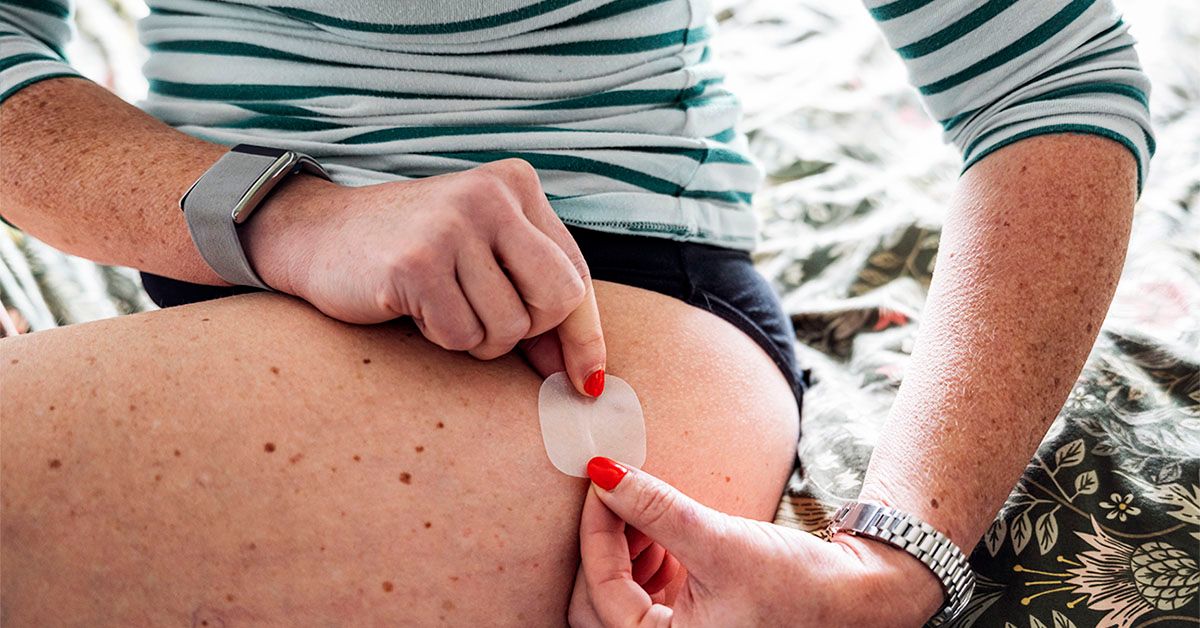
The demand for estrogen patches has outpaced supply, and manufacturers are struggling to catch up.
Prescriptions for estrogen-based HRT have surged, according to an analysis by health data company Truveta. Patch use specifically increased by more than triple between 2018 and early 2026.
Among women ages 45–54, prescribing rates jumped 184%, and in February 2026, roughly 1 in 20 women in that age group had an estrogen-based HRT prescription, the Truveta data showed.
Several forces drove that growth. In November 2025, the FDA began removing some of the strongest safety label warnings from certain HRT products.
The Food and Drug Administration (FDA) said it initiated the labeling changes after a comprehensive review found the warnings overstated the risks for many women, particularly those who start therapy near the onset of menopause.
“Demand for hormone replacement therapy has surged since our announcement,” Makary said.
G. Thomas Ruiz, MD, an OB-GYN at MemorialCare Orange Coast Medical Center in Fountain Valley, CA, said the shift has been dramatic in his own practice.
“As soon as the FDA changed its black box warning… I got so many patients who are no longer fearful,” Ruiz told Healthline. He added that the biggest concern holding women back had been breast cancer risk — a fear rooted in the original Women’s Health Initiative findings.
Sarah Prager, MD, an OB-GYN at University of Washington Medical Center, said that she’s seen the same trend.
“I have seen a huge uptick in patients requesting estrogen as part of menopausal hormone therapy,” Prager told Healthline, adding that she has noted patients are having a difficult time accessing patches.
“Our field is starting to catch up on how helpful estrogen can be, how safe it generally is, and how early we could/should be starting mHT for patients to help with symptoms,” she said.
Leave a Reply