
Discussion
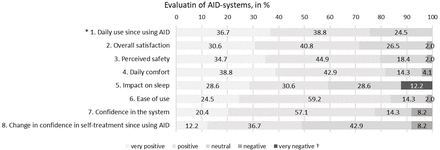
The aim of this survey was to examine how AYA experience the use of diabetes technologies in real-life settings. The focus was on PROs, as these are particularly important to the everyday life and well-being of this age group. As in other studies,11 the use of AID systems was associated with improved glycemic control in AYA. Treatment satisfaction was highest among AID users, with the difference reaching statistical significance compared with those using CSII. Three-quarters of AID users reported positive experience with greater satisfaction with their AID system compared with their previous therapy. The 12% subgroup who reported a negative impact on sleep quality can be attributed to the use of first-generation sensors. Some systems used sensors that required regular calibration and often triggered alarms when the measurements were inaccurate (see online supplemental document for the types of AID used). This often occurred at night, disturbing sleep. The current generation of sensors requires little or no calibration, and these issues have now been resolved.
These findings make a significant contribution to the ongoing debate surrounding the potential negative impact of new technologies, especially on AYA. Concerns often include the transparency of diabetes due to wearing the devices, changes in body image, loss of control with increasing automation and excessive demands due to the huge amount of diabetes-related data and technical problems.16 18 However, these concerns were not supported by our data. High treatment satisfaction among AID users and their appreciation for the convenience and relief provided by the technology point to a positive user experience in their daily lives. This finding is consistent with the data from the iDCL Trial,19 which reported that participants experienced a greater number of benefits than burdens as a result of using the AID system.
Despite improvements in glycemic outcomes and treatment satisfaction, our study found no significant differences in depression and anxiety levels across treatment modalities. These findings are consistent with previous studies on AID use in children and adolescents19–22 as well as a meta-analysis including patients of all ages.3 A systematic review by Pease and colleagues2 found no clear superiority of any therapy in terms of QoL. Others have shown that diabetes technologies tend to have predominantly positive effects on diabetes-specific (eg, fear of hypoglycemia, diabetes distress, treatment satisfaction), rather than generic, PROs.23 In line with these findings, our sample showed lower levels of diabetes distress, among AID users compared with MDI users. However, this difference was small. In a recent study of an adult population, AID users showed significantly lower scores in the ‘eating distress’ subdimension, but not in the overall PAID score (compared with MDI).24 Regardless of their treatment modality, respondents expressed particular concern about potential complications and the exhaustion caused by the constant effort required to manage their diabetes. Overall, it seems that advanced technologies such as AID can help overcome some of the challenges of living with diabetes. However, they can only reduce the general burden of the condition to a limited extent.
A recent meta-analysis examining diabetes burden by age group reported that adults experienced significant reductions in diabetes burden after initiating AID, however, not in children and teenagers.25 Notably, the mean age of pediatric samples in those studies ranged from 9 to 16 years, substantially younger than our AYA sample (20.7±3.0 years). Interestingly, parents of pediatric AID users reported reductions in their own diabetes burden. The authors suggested this may reflect the fact that diabetes burden and corresponding benefit of AID lie with the individual primarily responsible for diabetes care. Our analysis revealed the effects of treatment modality only after adjustments were made for age and gender. This suggests that the burden of diabetes increases during the transition to adulthood, due to a shift in self-management responsibilities.26 The benefits of AID may therefore become more apparent at this stage of development. These results reinforce the idea that the benefits of diabetes technology may not be uniform across age groups25 and highlight the need for further research focused on the unique challenges faced by AYA.
Our exploratory regression analysis showed that HbA1 was significantly influenced by both treatment modality and treatment satisfaction, indicating the use of advanced technology and positive emotional response to treatment are key for achieving optimal metabolic outcomes. A separate regression analysis examining overall health status found that psychological PROs, alongside HbA1c, were significant predictors. Together, these findings demonstrate that while advanced diabetes technologies can improve clinical outcomes, overall health status may be shaped by broader domains, including mental health factors. This highlights the importance of addressing both metabolic control and psychological well-being in this population.
Despite these results, it is concerning that our sample of AYA continues to report high levels of psychological distress.7 8 About 40% of our sample reported high diabetes-related distress, one third reported anxiety symptoms, and 44% showed increased depressive symptoms. This rate is four times higher than for metabolically healthy AYA (9.5%).27 Moreover, over 25% had received treatment for psychological issues within the past year. This may be partially explained by the self-selection of our sample (eg, high proportion of females, greater disease burden among camp participants) or the timing of the survey, which took place shortly after the COVID-19 pandemic, which has led to a deterioration in the mental health of AYA.28 Nevertheless, our findings confirm that quality of metabolic control and psychological health are key components of overall well-being. Given the high prevalence of psychological distress in this group, mental health support should be an integral part of diabetes management, as recommended by the ISPAD guidelines.29 AYA with T1D should be regularly screened for psychological distress and offered appropriate psychosocial support from their healthcare teams.30
A key strength of this study was its real-world setting, capturing the lived experiences of AYA with T1D. However, our findings should be interpreted within the context of several limitations. First, participants were recruited from a voluntary diabetes camp, which may have introduced selection bias specific to this cohort. For instance, the sample was characterized by a disproportionately high number of female participants, limiting the interpretation of gender-specific analysis. As women score higher on measures of psychological distress,24 the over-representation of women must be considered when evaluating psychological outcomes. Similarly, four participants who identified as gender-diverse could not be included in the analysis due to the small subgroup size. To better investigate the influence of gender diversity, future research should make a greater effort to recruit individuals from this group. Another potential issue arising from our sampling method is that participants in a voluntary diabetes camp may be particularly committed to managing their condition. This may be reflected in the high proportion of AID users and participants with low HbA1c levels, particularly among female AYA. Conversely, participation in the camp may also have been motivated by greater challenges in diabetes management, which could explain the elevated prevalence of psychological distress observed in the sample. Therefore, caution is warranted, as the generalizability of the results may be limited. Second, all data, including glycemic measures, were self-reported; thus, recall and social desirability biases cannot be ruled out. Due to the anonymous nature of the study, participants’ medical records were not accessed. Nevertheless, given that the study focused on PROs, self-reporting was the most appropriate methodological approach. Finally, as this was a cross-sectional study, causal relationships among variables could not be established. For example, HbA1c levels and PROs prior to transitioning to an AID system were not assessed. A prospective longitudinal study is needed to examine the temporal relationships among technology use, glycemic control and psychological well-being in AYA with diabetes in order to establish causality.
Our study demonstrated that AID use was associated with increased treatment satisfaction, reduction in diabetes-specific burden and improved metabolic control. However, general psychological distress, including symptoms of depression and anxiety, did not differ across treatment modalities and remained prevalent. As diabetes technology continues to evolve, improvements in both glucose control and user experience are anticipated. That said, to truly benefit AYA with T1D, these technological advances must be integrated into a holistic, patient-centered approach to care, which includes attention to mental health and overall well-being.
Leave a Reply