
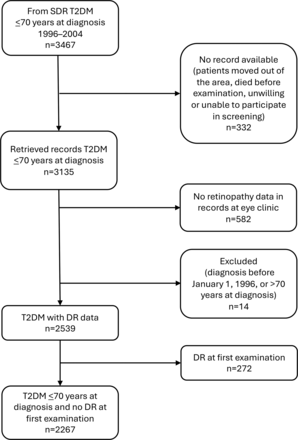
This cohort study of 2539 patients diagnosed with T2DM in 1996–2004 found that 10.7% of them had DR at diagnosis. Of 2267 patients with T2DM who did not have any DR at their first eye examination, 926 developed DR and 101 developed STDR during up to 24 years of follow-up (mean 12.8 years). High HbA1c and the need for antihypertensive treatment were associated with increased risk of DR, whereas older age and diagnosis in the latter period of the study (1999–2004) were associated with lower risk of DR.
Results in relation to other studies
The proportion of patients with an eye examination was higher in our study than was recently reported by the Swedish National Diabetes Register (NDR) with data from 2015 to 2019 (73% vs 56%, respectively).27 The higher proportion in our study may be due to the inclusion of patients who underwent an eye examination for reasons other than diabetes photo screening, whereas the NDR study covered only patients who had been screened for DR. However, the proportion of patients examined in our study is in line with the result in another Swedish study with data from 2016 to 201728 as well as a study from the Danish screening program with data from 2013 to 2018.29
We found that 10.7% of patients had DR at their first eye examination after T2DM diagnosis, a result similar to that in another Swedish study.28 The proportion was somewhat larger than in the Danish study (8.8%).29 In contrast, it was smaller than in the NDR study (17.2%), which included older patients and had a greater extent of missing data on DR.27
During follow-up, we detected 926 patients who developed DR (an incidence of 32/1000 person-years), among whom 89 (3/1000 person-years) developed CSM, which corresponds to a 29.0% cumulative 10-year incidence of DR. A Spanish prospective study found a similar cumulative incidence at 9 years of follow-up (26.4%).30 Interestingly, the patients in our study were nearly 10 years younger and diagnosed at an earlier period (1996–2004) than those in the Spanish study (2007–2015) but had a similar HbA1c (56.1 vs 57.1 mmol/mol, respectively, converted according to International Federation of Clinical Chemistry and Laboratory Medicine). Despite this, the cumulative incidences of DR are similar in the studies. The Danish study29 also showed similar incidences as ours with 5-year cumulative incidences of DR and PDR of 8.8% and 0.2%, respectively, whereas our corresponding incidences were 9.3% and 0.0% (the first patient with PDR appeared after 8.1 years). The healthcare systems and prevalence of T2DM in Sweden and Denmark31 are similar, and it may be assumed that the patients were comparably monitored.
Younger age at T2DM diagnosis was associated with increased risk of DR in our study, and a similar result is seen in studies from NDR,27 Spain30 and Denmark.29 Younger patients in our study’s cohort had higher HbA1c and were more often on antihypertensive treatment. Both these variables were independently associated with risk of DR. Thus, diagnosis of T2DM at a lower age may imply a more serious type of diabetes than diagnosis at an older age, which is in line with earlier studies. In two studies from SDR32 and NDR,33 there was generally a higher risk of any complication of diabetes and a higher mortality in patients with a lower age at diagnosis as was also found in a study including high-income countries.34
Higher HbA1c at diagnosis was associated with higher risk of DR compared with those with lower HbA1c, which aligns with several earlier studies, such as the United Kingdom Prospective Diabetes Study (UKPDS 50) from 2001,12 the NDR study27 from 2023 and the studies from Spain30 and Denmark.29 Furthermore, a multicenter study (Action to Control Cardiovascular Risk in Diabetes, ACCORD) from the USA and Canada published in 2014 found a beneficial effect of lowering HbA1c on the progress of DR.35 A long time with high blood glucose levels may result in the production of advanced glycation end products and the upregulation of growth factors,36 resulting in vascular changes and DR. Early normalization of blood glucose levels seems to be important.12 37
In our previous study,20 in which prevalent DR was included, we found an association between antihypertensive treatment and lower risk for the development of DR. In our current study, by contrast, antihypertensive treatment was associated with increased risk of developing DR, in line with other studies, such as the Danish study29 and a study from the USA.38 However, we do not interpret our results as that treatment with antihypertensive agents per se increases the risk of DR, but rather that the antihypertensive medication was a proxy for hypertension. We had no information in SDR on which antihypertensive drugs were prescribed in the inclusion period or during follow-up. The levels of SBP and DBP were not associated with a higher risk of developing DR in the present study. The ACCORD study found no benefit of lowering SBP from 140 to 120 mm Hg,35 but the SBP level seemed to be significant in the UKPDS 50 study,12 and the NDR study found an association between risk for DR and an SBP of over 140 mm Hg.27 In our previous study, SBP was associated with the development of DR in patients with HbA1c above 63 mmol/mol.20 This aligns with the UKPDS 30 study,9 in which patients with higher HbA1c than in our current study also showed an association between higher SBP and the development of DR.9 In the present study, patients had a mean SBP of 140 mm Hg, which may explain the lack of association between the development of DR and SBP levels in this population. In addition, the patients had lower HbA1c than in studies in which SBP was associated with the development of DR, suggesting that metabolic status and blood pressure levels may act synergistically on the risk of developing DR.
Diagnosis of T2DM in the earlier period (1996–1998) was associated with a higher risk of DR, even after adjustment for confounders. Still, this may partly reflect that patients diagnosed in this period might have been exposed to a greater burden of cardiovascular risk factors over time. It could also be related to the higher glycemic diagnostic threshold that remained in place until the 1999 WHO revision, which lowered the fasting plasma glucose criterion in response to evidence of increased microvascular complications at levels ≥7 mmol/L.3 In addition, monitoring and follow-up of patients with T2DM have continually improved, alongside more ambitious treatment goals for risk factor control. Secular trends of improvement in other outcomes have also been reported in Sweden; for example, a successive decrease in excess mortality among patients diagnosed between 1991 and 2004 has been shown in the SDR,32 and a reduced risk of macrovascular complications between 2001 and 2019 has been observed in nationwide data.39
The association between smoking at baseline and time to DR was not significant after adjustment for other factors. Other studies have shown no17 or even a protective12 15 effect of smoking on retinopathy. We had a relatively large amount of missing data on smoking and therefore less power in our analyses. Our data on smoking were self-reported, so the data may be less reliable. Some data indicate a relationship between cigarette smoking and DR and that the effect could be partly reversible.13 It is not known whether patients in our study continued smoking throughout follow-up or ceased smoking shortly after being diagnosed with T2DM.
Strengths and limitations
Our study has several strengths. It included a relatively large cohort of patients with high coverage and long (up to 24 years) follow-up. Since the 1970s, patients with hypertension in Skaraborg primary healthcare were screened for diabetes at yearly controls. This might contribute to earlier detection of symptomless diabetes and pre-diabetes although no population screening for diabetes was performed. The results on retinopathy are based on a review of medical records and are not the result of extraction of data from registers. Patients with diabetes in Skaraborg County were referred to the Department of Ophthalmology, Skaraborg Hospital for DR screening. There was no alternative screening facility during the study period (except for some patients June–December 2021, which is unlikely to have any significant impact on the results) and all documentation from Skaraborg Hospital was reviewed for correctness and grading by the first author. This results in more complete information on DR than studies based on registers. Skaraborg County is prominently rural and has a relatively stable population, facilitating long follow-up. Most studies on DR among patients with T2DM have either been intervention studies,40 have investigated the prevalence of DR11 27 or have had relatively short follow-up.28 41 Furthermore, all individuals living in Sweden have a unique identity number, which made it possible to extract clinical data for patients in the SDR from ophthalmological hospital records.
The study also has some limitations. We excluded patients >70 years at diagnosis, as they were not included in the screening program in Skaraborg during the early period of inclusion. We do not know whether inclusion of older patients would have changed the results in any direction. Also, we had to address missing data, which inherently reduces statistical power and may bias estimates unless missingness is completely at random. To mitigate this, we excluded C-peptide as a covariate in model 3 due to its high degree of missingness. Furthermore, the risk estimates in models 1 and 2 remained similar after further adjustments in model 3. Unfortunately, we did not have access to longitudinal data on HbA1c, lipids, blood pressure or smoking habits during follow-up. Capturing these measures over time would have provided more detailed insight into their relationship with DR progression. It is reasonable to assume that risk factor control generally improved during the long follow-up period of up to 24 years, given temporal trends towards lower lipid levels, improved blood pressure control, increased smoking cessation and progressively more ambitious treatment targets, including tighter glycemic control in clinical guidelines. Therefore, the baseline measures do not necessarily reflect the cumulative exposure to these risk factors over time, which should be considered when interpreting the associations observed in this study. Neither did we have access to mortality data or to information on whether patients had developed DR at the time of death. This limitation likely resulted in an underestimation of both the total number of patients who developed DR and the overall follow-up time, which in combination may have introduced some bias in the estimated results. Also, we had no data on neuropathy or nephropathy for analyses. Digital patient health records were implemented from 2007 at the ophthalmologic clinic, and paper records from earlier periods may have been stored in archives difficult to access.
Leave a Reply