

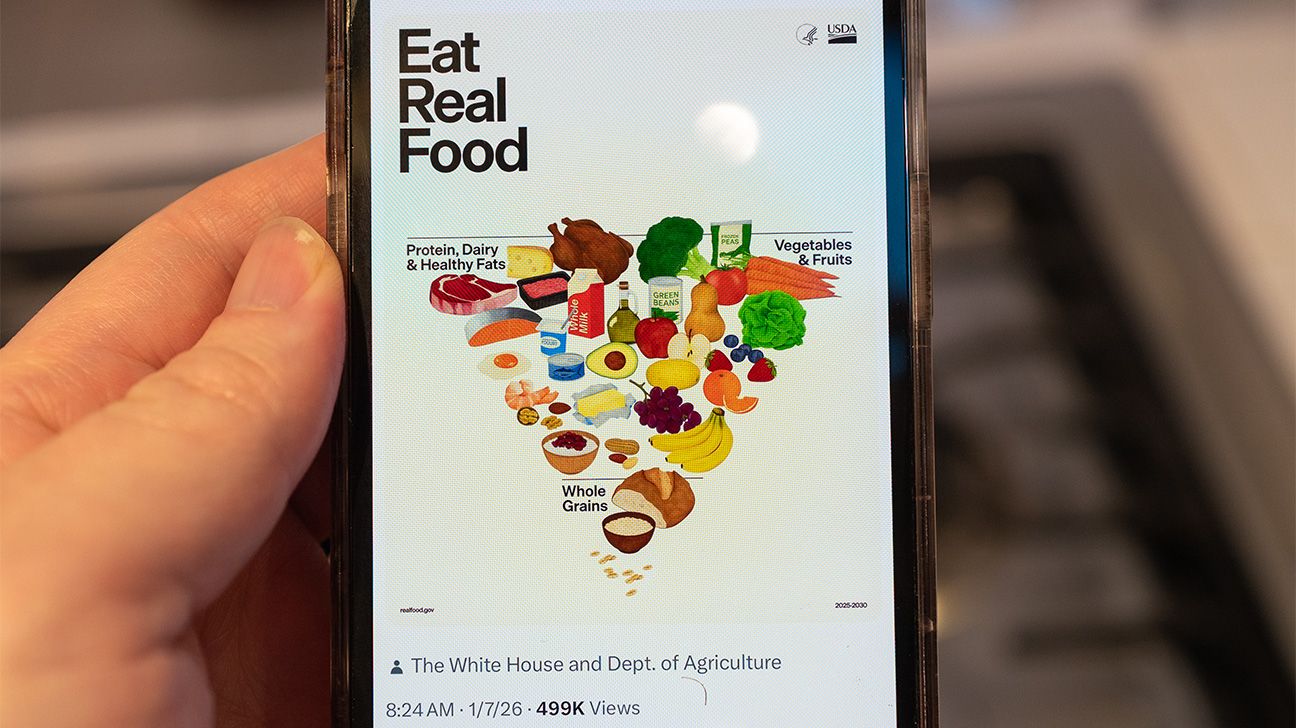
- New federal dietary guidelines recommend increasing protein and full-fat dairy intake while reducing consumption of ultra-processed foods, added sugars, and alcohol.
- Some experts argue that the protein recommendations place too much emphasis on meat and not enough on nuts, beans, and legumes.
- Other experts say that dairy products offer some health benefits, but caution that daily intake of these foods should be moderate.
The new inverted food pyramid urges Americans to sharply limit their intake of added sugars or non-nutritive sweeteners, saying “no amount” is considered part of a healthy diet.
The nutrition guidelines state that no meal should consist of more than 10 grams, or about 2 teaspoons, of added sugar.
Federal health officials have also targeted “highly processed” foods and refined carbohydrates, recommending that consumers avoid “packaged, prepared, ready-to-eat or other foods that are salty or sweet, such as chips, cookies and candy.”
The 10-page guidelines encourage Americans to “eat the right amount for you” with daily caloric intake based on age, sex, height, weight, and level of physical activity. It highlights portion size and hydration as key components.
“These guidelines return us to the basics,” said Health and Human Services Secretary Robert F. Kennedy Jr. in a press release. “American households must prioritize whole, nutrient-dense foods — protein, dairy, vegetables, fruits, healthy fats, and whole grains — and dramatically reduce highly processed foods.”
The Dietary Guidelines for Americans are a federal nutrition recommendation that is updated every five years. Here’s what experts think of the latest changes.
One of the key recommendations in the new guidelines is to increase Americans’ daily protein consumption from 0.36 grams per pound of body weight to between 0.54 and 0.73 grams per pound of body weight.
Federal health officials recommend that Americans include protein-rich foods in every meal. They encourage people to “prioritize high quality, nutrient-dense protein foods as part of a healthy dietary pattern.”
They say the protein can come from a variety of foods, including:
Dalia Perelman, a research dietitian at Stanford University, said higher levels of protein can be beneficial for older adults and people undergoing weight loss, but she isn’t sure “these higher levels are necessary for the general population, especially given that most Americans already consume more than the minimum protein requirement.”
“We’re in a food environment where protein is aggressively marketed and added to many foods,” Perelman told Healthline.
“Broadly increasing protein recommendations risks reinforcing that imbalance rather than addressing true nutritional gaps. Americans already consume insufficient fiber, and elevating protein as the dominant dietary goal may unintentionally displace fiber-rich foods.”
Mir Ali, MD, a general surgeon, bariatric surgeon, and medical director of the MemorialCare Surgical Weight Loss Center at Orange Coast Medical Center in California, told Healthline that there are plenty of protein-rich choices.
“Red meat isn’t necessarily bad as long as it’s not overdone,” Ali said, adding that other sources of protein, such as chicken, fish, lentils, beans, and nuts, might be better choices.
The guidelines encourage Americans to consume full-fat dairy products with no added sugars.
They recommend “3 servings per day as part of a 2,000-calorie dietary pattern, adjusting as needed based on your individual caloric requirements.”
The guidelines note that “dairy is an excellent source of protein, healthy fats, vitamins, and minerals.”
Perelman said moderate levels of fermented dairy products, such as cheese, can produce some favorable cardiometabolic outcomes.
However, she adds that one serving per day, about
“The evidence supports moderation, not escalation, as we don’t have the kind of long-term trial data needed to justify population-wide recommendations for higher consumption,” Perelman said.
“Given that multiple daily servings of full-fat cheese can quickly exceed recommended
The guidelines encourage the incorporation of healthy fats, which are “plentiful in many whole foods such as meats, poultry, eggs, omega-3-rich seafood, nuts, seeds, full-fat dairy, olives, and avocados” into the daily diet.
“When cooking with or adding fats to meals, prioritize oils with essential fatty acids, such as olive oil. Other options can include butter or beef tallow,” the guidelines state.
They add that “saturated fat consumption should not exceed 10% of total daily calories.”
Perelman said the saturated fat goal could be unrealistic, especially given the other recommendations in the guidelines.
“The guidelines contain internal contradictions,” she said. “They retain a numeric recommendation to limit saturated fat to 10% of calories, while simultaneously emphasizing meat and full-fat dairy and allowing portion sizes that make it very difficult to stay within that limit in real-world diets.”
The guidelines recommend that Americans eat vegetables and fruits throughout the day, focusing on their whole forms.
They recommend “colorful, nutrient-dense vegetables and fruit” with 3 servings of vegetables per day and 2 servings of fruit per day.
Ali noted that vegetables in general are a good component of a healthy diet, although he added that “starchy” vegetables, such as potatoes and corn, should be consumed in moderation.
“My overall advice is to focus on simple, well-established dietary patterns that are supported by a large body of evidence,” said Perelman.
“Eat a wide variety of plant foods (fruits, vegetables, legumes, nuts, and seeds), prioritize whole grains over refined grains, and choose protein sources like fish, poultry, beans, and nuts while being more mindful about portions of red meat, processed meats, and cheese.”
“Rather than focusing on specific nutrients or rigid targets, the goal should be building balanced, flexible eating patterns that people can maintain over time,” she added.
Leave a Reply